How to design custom boxes for small business packaging
Story details
- Written by
- Boxo Packaging
- Published
- Read time
- 7 min
- Reads
- 6
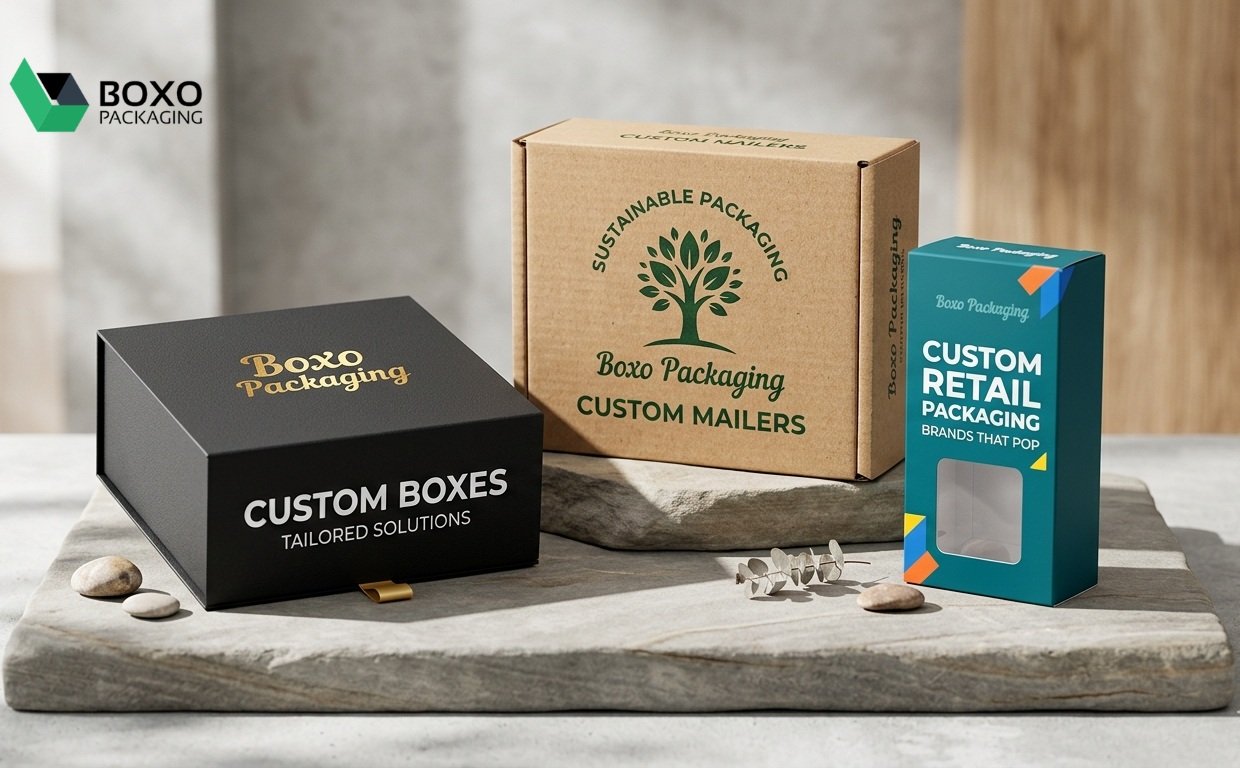
If a packaging invoice came in higher this year despite ordering roughly the same volume as last year, that's not a pricing mistake, it's a structural shift in the supply chain itself. Custom Boxes across the industry got more expensive in 2026 largely because producers pulled capacity out of the market, not because demand suddenly spiked. Korpack's analysis of containerboard pricing found roughly 3.9 million tons of US containerboard capacity, about 10 percent of the total, was permanently retired between February 2025 and March 2026, and that structural reduction is exactly what let producers raise prices even as order volumes stayed relatively soft. North American containerboard prices rose a net 100 dollars per ton in the first half of 2026 alone, according to the Fastmarkets RISI index cited by Korpack. Boxo Packaging has been fielding more questions about pricing volatility this year than in recent memory, mostly from clients confused about why costs keep climbing without a clear demand story behind it.
Why Did Custom Boxes Pricing Move on Supply Cuts Instead of Demand Growth?
Because producers deliberately reduced capacity to protect margins during a period of soft demand, and that's a fundamentally different pricing dynamic than the usual demand driven cost increases. Custom Boxes buyers are used to prices rising when everyone's ordering more, not when order volumes are actually flat or declining.
The scale of that capacity reduction is genuinely unusual. Packaging Dive reported North American containerboard production during the first quarter of 2026 dropped 8 percent year over year, described as the largest such decrease in years, stemming from the wave of facility closures that concluded during that same quarter.
Korpack's reporting explains the mechanics behind that decision clearly. With that much capacity removed from the market, producers can hold pricing steady or push it higher even when volumes stay soft, since there's simply less supply chasing the same order book.
That's a real shift worth understanding before assuming pricing will correct itself once demand picks back up. If capacity stays permanently reduced, prices may not fall back down even if order volumes eventually recover to prior levels.
Is This Pricing Pressure on Custom Boxes Likely to Ease Anytime Soon?
Not immediately, based on how producers are describing their own pricing strategy right now. Custom Boxes buyers should probably plan for continued cost pressure through the rest of 2026 rather than expecting a quick reversal.
Packaging Dive's coverage of earnings calls notes International Paper executives expect roughly 175 million dollars in pricing benefits for the year, with most of that reflected in results during the second half of 2026, suggesting producers are actively planning around sustained higher pricing rather than a temporary bump.
Korpack's analysis also flags something structurally unusual about how these increases are being announced. Producers pushed two formal price increases within four months in 2026, when the historical cadence in the North American open market has typically run closer to five month intervals, even during the unusually hot pricing environment of 2020 through 2022.
That accelerated pace signals a market behaving differently than it has in years, according to Korpack's analysis, which is worth factoring into any budgeting or contract negotiation happening around custom box orders through the rest of this year.
A few practical takeaways for anyone budgeting custom boxes orders through 2026:
- Expect pricing volatility tied to capacity decisions, not just order volume trends
- Lock in longer term supplier contracts where possible to hedge against further increases
- Watch regional pricing differences, since North America and Asia are moving on different timelines
- Build a small cost buffer into packaging budgets rather than assuming flat year over year pricing
How Is the Folding Carton Segment, Including Tuck Boxes, Handling This Same Uncertainty?
Cautiously, with demand described as genuinely uncertain rather than clearly growing or shrinking. Tuck Boxes fall under the broader folding carton category, and that segment specifically has been navigating a rockier path than corrugated packaging through this same period.
Packaging Dive's coverage of the Paperboard Packaging Council's 2025-2026 trends report, produced by Fastmarkets RISI, notes tariffs, inflation, reductions in government benefits, and declining consumer confidence have all contributed to concerns that folding carton demand is confronted with a genuinely uncertain future.
That's a meaningfully different tone than corrugated packaging, which benefits more directly from steady e-commerce shipping volume. Folding cartons, and tuck boxes specifically, depend more heavily on discretionary retail purchases, which are exactly the category most sensitive to the consumer confidence declines cited in that same report.
The same report does note some cautious optimism though, projecting shipments could turn around in 2026 after a disappointing 2025 that fell short of the recovery the industry had originally expected coming out of pandemic era demand patterns.
Are Tuck Box Prices Following the Same Trajectory as Corrugated Custom Boxes Right Now?
Not exactly, and that divergence is worth understanding before assuming all paper based packaging is moving in lockstep. Tuck Boxes built from folding boxboard face a different supply and pricing dynamic than corrugated boxes built from containerboard, even though both ultimately come from similar paper feedstocks.
IMARC Group's regional pricing data shows North American corrugated paper prices actually declined about 3.3 percent between December 2025 and March 2026, reaching 0.29 dollars per kilogram, driven by softening demand in packaging and shipping markets following the post-holiday season slowdown.
That's notably different from the containerboard capacity story driving corrugated pricing higher elsewhere, and it illustrates how fragmented pricing has become across different paper grades and regional markets throughout this period. A brand ordering tuck boxes shouldn't automatically assume the same pricing pressure hitting corrugated shipping boxes applies equally to their folding carton order.
Towards Packaging's broader market data still shows underlying growth though, projecting the global paper and paperboard packaging market to expand from roughly 337.64 billion dollars in 2025 to 513.41 billion dollars by 2035, suggesting the current volatility is more of a short term adjustment than a long term demand collapse.
What Should Brands Ordering Tuck Boxes Do Differently Given This Uncertain Outlook?
Build in flexibility and order earlier than usual, mostly, since supply conditions are shifting faster and less predictably than the historical pattern most buyers are used to planning around. Tuck Boxes ordered on a tight, last minute timeline carry more risk right now than they typically would in a stable pricing environment.
Packaging Dive notes e-commerce customers' growing demand for mailers in place of traditional boxes is driving packaging companies like Pregis, Sealed Air, and TemperPack to invest in production expansions, which suggests capacity is shifting toward different formats rather than uniformly tightening across every packaging category.
That shift matters for tuck box buyers specifically, since a supplier redirecting investment toward mailer production might have less flexible capacity available for smaller, more specialized folding carton runs during periods of high demand elsewhere in their production line.
Boxo Packaging has been encouraging clients to place tuck box orders further ahead of their actual need date this year, mainly to avoid getting squeezed by a supplier's capacity allocation decisions made in response to this broader industry volatility.
Bringing Custom Boxes and Tuck Boxes Together Through a Volatile Supply Year
Custom Boxes and Tuck Boxes are both navigating the same underlying supply chain volatility in 2026, but through genuinely different pricing and demand dynamics tied to their specific paper grades and end markets. Corrugated custom boxes are dealing with deliberate capacity reduction pushing prices up, while tuck boxes and other folding cartons are dealing with softer, more uncertain consumer demand pulling in the opposite direction.
Understanding that distinction matters more than treating packaging costs as one uniform category rising or falling together, since a brand's actual budgeting decisions should reflect which specific packaging category they're ordering and how that category's supply chain is actually behaving right now.
Whether it's a brand locking in corrugated shipping box pricing before another round of containerboard increases, or a retailer planning tuck box orders further ahead to avoid capacity squeezes, the smartest move through this kind of volatility is staying closer to supplier conversations than usual rather than assuming last year's pricing and lead times still apply. Teams like Boxo Packaging tend to keep that dialogue active year round precisely because supply conditions like these can shift faster than a standard annual planning cycle accounts for.
Powered by Froala Editor
About the author
Boxo Packaging
Boxo packaging one of the top-rated custom packaging box providers that offer a lot of customization options according to your product's look and need, be it high-end packaging or Eco-friendly. We also provide assorted sizes of wholesale o…
Last updated . If you spot an error, contact our newsroom with the article link and supporting information.