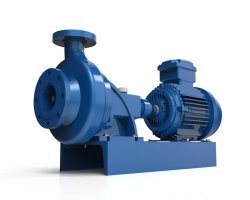
Urban Water Expansion and Irrigation Modernization Are Elevating Pump Demand Across Asia-Pacific
Story details
- Written by
- Adam Williamson
- Published
- Read time
- 5 min
- Reads
- 5,628
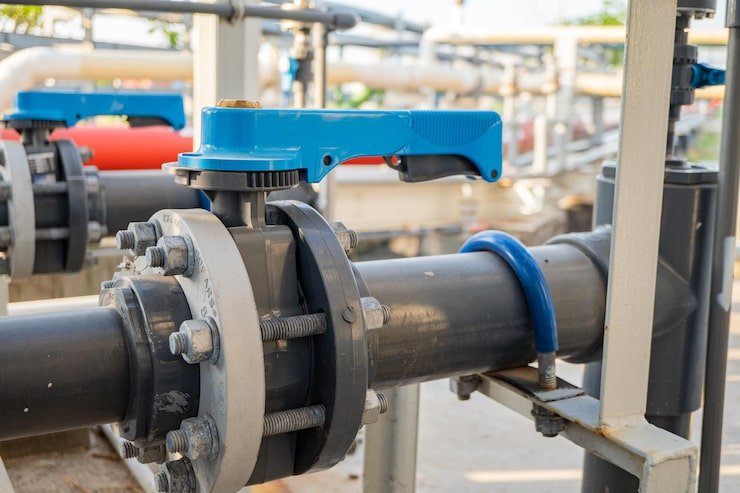
Asia-Pacific has some of the world’s most diverse water-management requirements. Rapid urbanization, industrial development, agricultural irrigation, population concentration, water scarcity, and climate-related pressures are increasing the importance of dependable water infrastructure. Pumps are fundamental to this system, supporting municipal water distribution, irrigation, industrial processes, groundwater extraction, drainage, desalination, and large-scale water transfer.
According to a Vyansa Intelligence report, the Asia-Pacific water pump market was valued at USD 22.23 billion in 2025 and is projected to reach USD 28.01 billion by 2032, representing a 3.36% CAGR during 2026–2032.
Water Infrastructure Investment Is Becoming More Urgent
Asia-Pacific has made substantial progress in water security, but infrastructure requirements remain considerable. The Asian Development Bank’s Asian Water Development Outlook 2025 estimates that the region requires approximately USD 4 trillion in water, sanitation, and hygiene investment through 2040. Current public spending covers less than 40% of the requirement.
For an Asia-Pacific water pump market analysis, this investment gap is highly relevant. New water-treatment facilities, distribution networks, reservoirs, irrigation systems, and sanitation infrastructure require pumps capable of delivering reliable service under widely varying operating conditions.
Urbanization Is Increasing Municipal Pump Requirements
Asia-Pacific includes some of the world’s largest and fastest-changing urban areas. Growing cities require reliable infrastructure to abstract, treat, store, and distribute substantial quantities of water.
ADB notes that cities across the region continue to face challenges in delivering safe and sustainable water and sanitation services as populations expand. Around 220 million people still lack basic water supply, while approximately 520 million remain without basic sanitation.
These detailed industry insights illustrate why municipal pumping requirements extend from large treatment facilities to booster stations and local distribution networks.
Irrigation Remains a Critical Pump Application
Agriculture represents another major source of pump requirements. Irrigation pumps transfer surface water and groundwater toward agricultural land, helping farmers maintain production where rainfall is insufficient or unreliable.
FAO reports that water stress is increasing across Asia-Pacific while millions of farmers lack secure access to the water required for food production. The organization is working across the region on irrigation modernization and more sustainable water management.
Efficient irrigation equipment becomes particularly important where groundwater levels, energy expenses, and limited water availability constrain agricultural operations.
Water Scarcity Is Encouraging Greater Efficiency
Water availability varies significantly across Asia-Pacific, but scarcity is becoming a more widespread concern. Population expansion, industrialization, urban development, agricultural consumption, and climate change are collectively increasing pressure on available resources.
FAO’s regional assessment identifies increasing water demand and changing climatic conditions as major threats to Asia-Pacific water resources.
For a water pump industry report, this environment strengthens the importance of pumps capable of delivering required flows without excessive water or energy consumption.
Energy Efficiency Is Becoming a Purchasing Priority
Pumps frequently operate for thousands of hours annually. Electricity consumption can therefore represent a substantial proportion of total ownership costs, particularly for high-capacity municipal, agricultural, and industrial applications.
Correct equipment sizing, high-efficiency motors, variable-frequency drives, and hydraulic optimization can reduce unnecessary energy use.
Variable-speed operation is particularly valuable when water requirements fluctuate because pump output can adjust to actual demand rather than continuously operating at maximum capacity.
Industrial Development Broadens Pump Applications
Asia-Pacific’s manufacturing base creates requirements for water pumps across numerous industries. Pumps can support cooling systems, boiler-feed applications, process-water circulation, raw-water intake, wastewater handling, and general utility operations.
Industrial facilities often have different priorities from municipal utilities. Chemical compatibility, pressure requirements, operating temperatures, reliability, and maintenance schedules can strongly influence equipment selection.
The latest industry analysis therefore needs to consider the diversity of pump specifications required across different end-use sectors.
Groundwater Pumping Remains Important
Groundwater is an essential water source in many parts of Asia-Pacific, particularly where centralized networks are limited or surface-water availability is unreliable.
Submersible and borewell pumps can support households, farms, commercial facilities, and industrial users. However, excessive groundwater abstraction creates sustainability concerns, making efficient water management increasingly important.
Pump selection needs to reflect well depth, water quality, required flow, energy availability, and expected operating hours.
Climate Risks Are Changing Infrastructure Design
Asia-Pacific is highly exposed to water-related disasters. ADB reports that the region accounts for approximately 41% of global flood events, while changing glaciers and snow systems threaten water supplies supporting billions of people downstream.
This creates contrasting pump requirements. Water scarcity can increase demand for transfer and irrigation systems, while floods create requirements for high-capacity drainage and dewatering equipment.
Resilient infrastructure therefore needs pumps capable of operating effectively under increasingly variable conditions.
Digital Monitoring Is Changing Pump Management
Sensors and intelligent controls are becoming increasingly valuable across large pumping networks. Operators can monitor pressure, flow, vibration, temperature, and electricity consumption to understand equipment performance.
These capabilities support condition-based maintenance. Instead of waiting for equipment to fail, operators can detect abnormal behaviour and schedule intervention earlier.
For an Asia-Pacific water pump market research report, digital capabilities can become important differentiators alongside traditional factors such as hydraulic performance, reliability, and price.
Aftermarket Services Create Long-Term Opportunities
The region already contains an enormous installed base of pumps across municipal, industrial, agricultural, and commercial applications. Existing equipment requires seals, bearings, motors, impellers, control upgrades, inspections, and eventual replacement.
Infrastructure expansion therefore creates long-term service requirements beyond initial equipment procurement.
Suppliers capable of providing technical assistance, readily available replacement parts, refurbishment, and predictive maintenance can strengthen their relationships with end users throughout the pump lifecycle.
Efficient Water Movement Will Remain Essential Across Asia-Pacific
Asia-Pacific’s pumping requirements are being shaped by urban infrastructure expansion, agricultural irrigation, industrial activity, water scarcity, climate resilience, and the need for better operational efficiency.
The diversity of the region means there is no single pump configuration capable of addressing every application. Municipal utilities may prioritize reliability and lifecycle efficiency, agricultural users may emphasize affordability and energy consumption, while industrial facilities can require highly specialized equipment.
As governments and utilities strengthen water security, pumps combining dependable hydraulic performance, efficient motors, intelligent controls, and accessible maintenance will remain fundamental to moving water effectively across the region.
Powered by Froala Editor

About the author
Adam Williamson
Contributor to TVL Health by The Viral Lines.
Last updated . If you spot an error, contact our newsroom with the article link and supporting information.