How to Choose the Right Hardware for Heavy-Duty Kitchen Storage
Story details
- Written by
- thathardwarestore
- Published
- Read time
- 2 min
- Reads
- 7
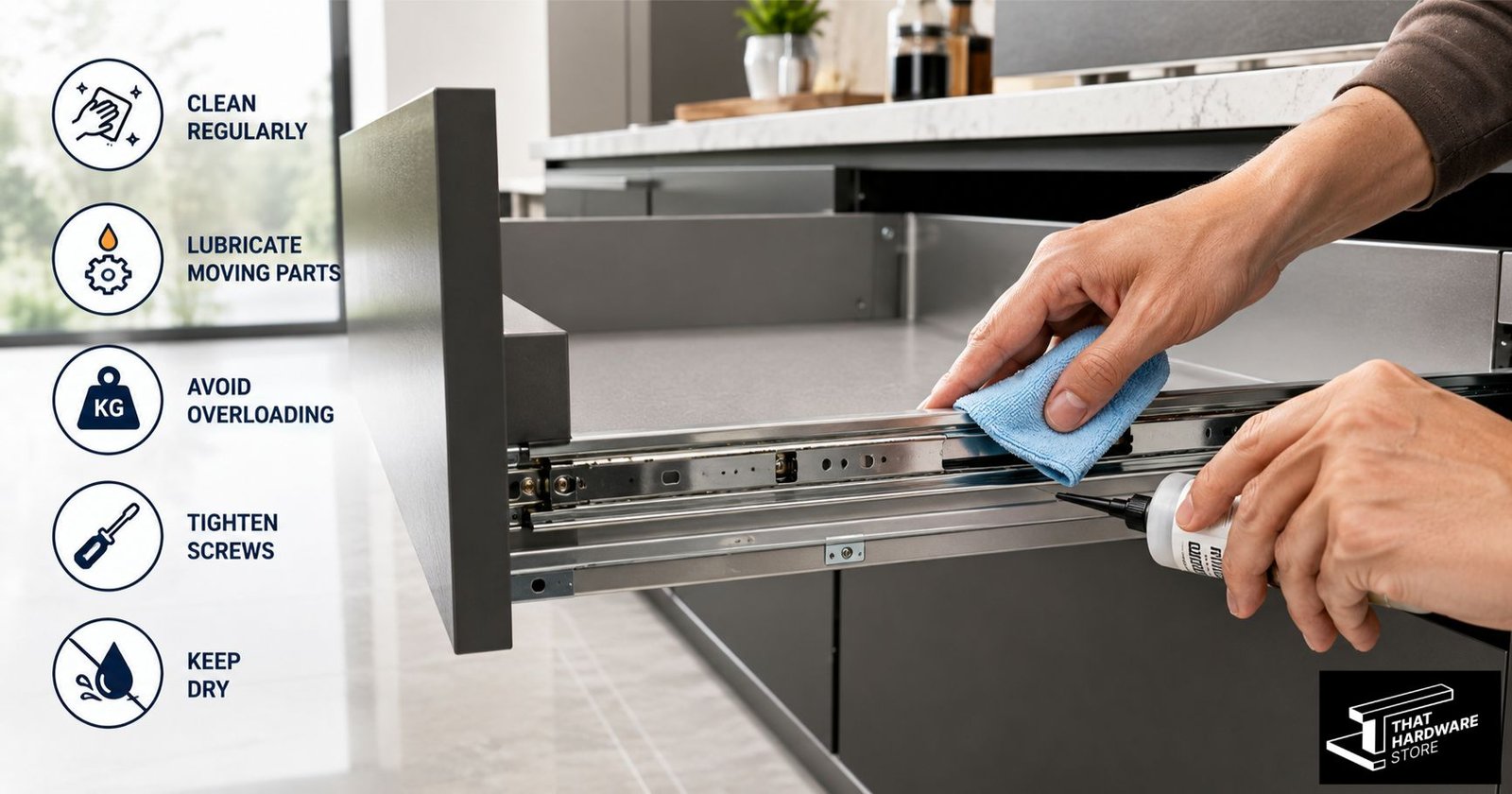
When designing or renovating a kitchen, most homeowners invest significant time selecting cabinet finishes, countertop materials, and backsplash tiles. However, the long-term functionality of your kitchen rarely depends on how your cabinets look—it depends on how they move.
Heavy-duty kitchen storage—such as deep drawers loaded with cast-iron cookware, pull-out pantry units holding bulk provisions, or spice racks packed with glass jars—requires hardware that can handle continuous stress without sagging, binding, or failing.
Choosing the right hardware comes down to three crucial parameters: weight capacities, material selection, and slide mechanisms. Here is a complete guide to specifying the right heavy-duty hardware for your kitchen.
Types of Extension Mechanics
Partial Extension (Three-Quarter Extension):
Extends roughly 75% to 80% of the drawer length.
Drawback: Leaves the rear 20% of the drawer buried inside the cabinet frame, forcing you to reach blindly into dark corners. Not recommended for heavy-duty deep drawers.
Full Extension (100% Extension):
Allows the drawer box to pull out completely past the face of the cabinet frame.
Advantage: Provides complete visual and physical access to every inch of storage space. Essential for deep pot drawers, spice pull-outs, and heavy organizer baskets.
Over-Travel Extension:
Extends slightly past full extension (typically 1 to 2 inches beyond the cabinet face).
Advantage: Useful when drawers are installed underneath thick countertop overhangs, ensuring full access without hitting the counter edge.
you can find the best telescopic channels at thathardwarestore:- https://thathardwarestore.com/door-hardware/drawer-slides/soft-close/
Powered by Froala Editor
About the author
thathardwarestore
"That Hardware Store is a modern online destination for homeowners, architects, and contractors. We specialize in premium smart locks, kitchen fittings, drawer slides, and hinges from top brands like Hettich and Dorset. Experience expert p…
Last updated . If you spot an error, contact our newsroom with the article link and supporting information.