Fiinovation News : Karnataka’s CSR Funding Could Reach ₹9,700 Crore by 2028–29, Driving Social Development
Story details
- Written by
- Fiinovation CSR Consultant
- Published
- Read time
- 5 min
- Reads
- 5
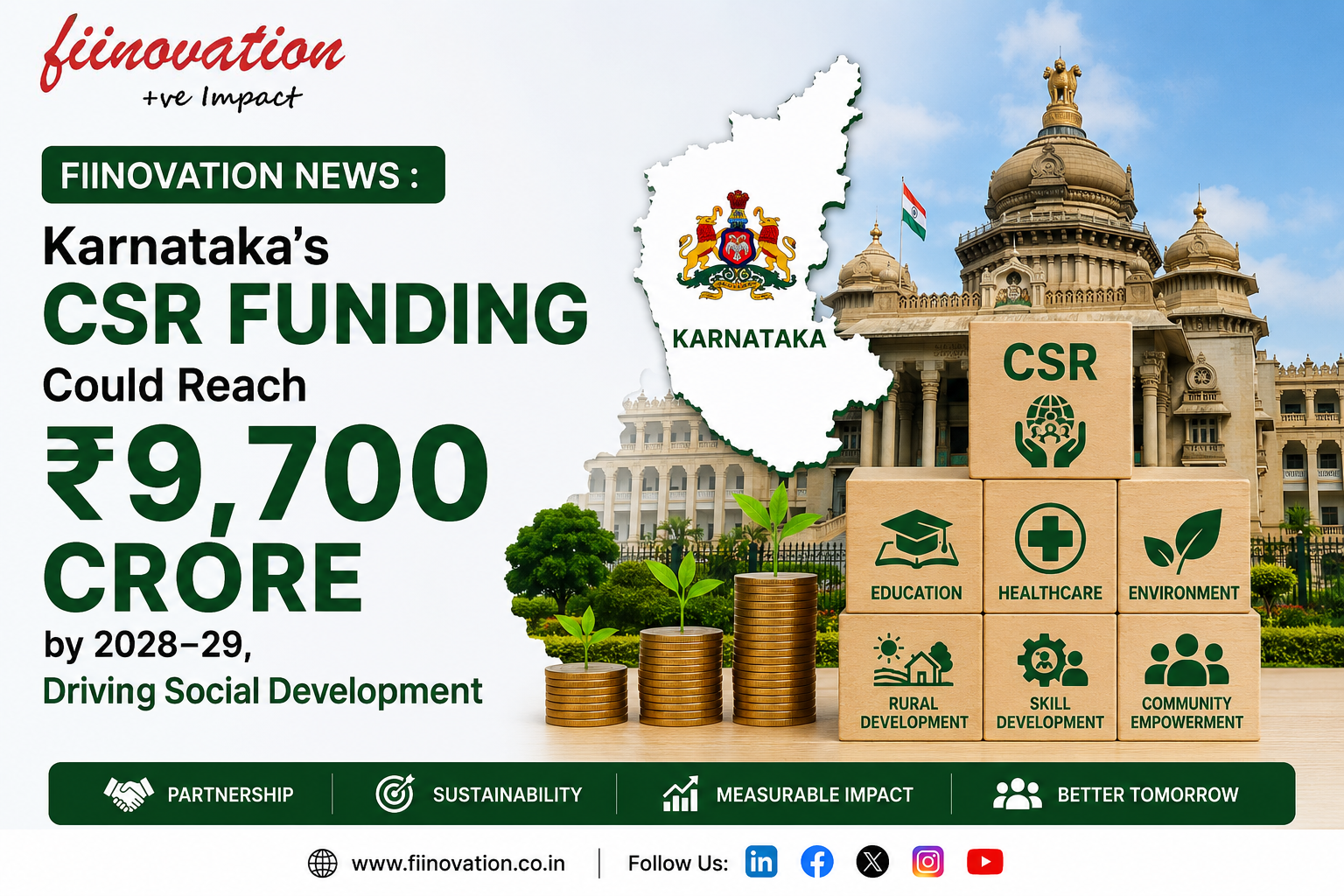
Corporate Social Responsibility (CSR) is becoming an increasingly important driver of social and economic development across India. Karnataka, with its strong corporate ecosystem, technology sector, manufacturing base, and growing startup economy, is emerging as a significant destination for CSR investments. According to recent projections, CSR funds in Karnataka may reach approximately ₹9,700 crore by 2028–29, highlighting the state’s growing potential for impactful corporate-led development.
The projected growth in Karnataka CSR funding reflects the increasing participation of companies in initiatives related to education, healthcare, skill development, rural development, environmental sustainability, women’s empowerment, and community welfare. As businesses increasingly connect their social responsibility strategies with measurable outcomes, CSR is moving beyond traditional philanthropy toward structured and sustainable development programmes.
Karnataka’s Growing CSR EcosystemKarnataka has a unique advantage when it comes to attracting CSR investments. Bengaluru, one of India’s leading technology and corporate hubs, hosts a large number of companies that fall under the CSR provisions of the Companies Act, 2013. Alongside Bengaluru, districts across Karnataka continue to face development challenges that create opportunities for targeted CSR interventions.
The potential ₹9,700 crore CSR funding by 2028–29 could provide substantial resources for addressing these challenges. Strategic CSR investments can help strengthen public infrastructure, improve access to quality education and healthcare, enhance employability, and support sustainable livelihoods in underserved communities.
For NGOs, social enterprises, and development organisations, this projected growth represents a significant opportunity to build partnerships with companies and implement high-quality CSR projects across Karnataka.
Education and Skill Development Could Remain Key Priorities
Education is expected to remain one of the major areas for CSR funding in Karnataka. Corporate investments can support school infrastructure, digital classrooms, teacher training, scholarships, STEM education, vocational training, and learning improvement programmes.
Skill development is another area where CSR programmes can create long-term economic value. Karnataka’s expanding technology and industrial sectors require a skilled workforce, while many young people in rural and semi-urban areas need access to employment-oriented training. CSR-supported skill development programmes can bridge this gap by providing vocational education, digital skills, entrepreneurship training, and industry-relevant capabilities.
Such initiatives can contribute not only to social development but also to employability and livelihood generation.
Healthcare and Community Development
Healthcare is another important sector for CSR intervention. CSR funding can help improve access to primary healthcare, preventive healthcare, maternal and child health services, mobile medical units, diagnostic facilities, and health awareness programmes.
Rural and economically disadvantaged communities can particularly benefit from well-designed healthcare initiatives. Companies can collaborate with NGOs and implementation partners to identify underserved populations and develop programmes based on local needs.
With CSR funds potentially reaching ₹9,700 crore in Karnataka by 2028–29, better planning and monitoring will be essential to ensure that investments translate into measurable community outcomes.
Environmental Sustainability and Climate Action
Environmental sustainability is also becoming increasingly important within the CSR landscape. Karnataka faces challenges related to water conservation, waste management, biodiversity, pollution, and climate resilience. CSR programmes can contribute to watershed development, rainwater harvesting, afforestation, renewable energy, sustainable agriculture, and community-based environmental conservation.
Companies can integrate environmental goals into their CSR strategies while simultaneously supporting communities that depend directly on natural resources. These projects can generate long-term benefits when they are designed with local participation and measurable sustainability indicators.
Role of CSR Consultants and Implementation PartnersThe growth of CSR funding in Karnataka also increases the need for professional CSR planning, project management, monitoring, and impact assessment. Companies often require specialised support to identify suitable projects, assess community needs, select implementation partners, monitor progress, and measure social outcomes.
CSR consultants can help businesses develop evidence-based CSR strategies aligned with both corporate objectives and community priorities. Professional implementation partners can further strengthen programme execution by providing field-level expertise and stakeholder engagement.
For organisations working in the CSR sector , Karnataka’s projected funding growth could therefore create opportunities across project development, CSR consulting, NGO partnerships, monitoring and evaluation, impact assessment, and sustainability management.
Need For Transparent and Impact-Oriented CSR
A rise in CSR expenditure alone does not guarantee meaningful social impact. Effective utilisation of CSR funds requires transparency, accountability, proper needs assessment, strong implementation systems, and regular monitoring.
Companies should focus on measurable outcomes rather than simply tracking expenditure. Baseline studies, periodic monitoring, beneficiary feedback, impact assessments, and end-line evaluations can help determine whether CSR projects are delivering the intended results.
As Karnataka’s CSR ecosystem expands, adopting an impact-oriented approach will be critical for ensuring that increased corporate investments contribute to sustainable development.
Future Outlook For Karnataka CSR FundingThe projected increase in Karnataka CSR funds to ₹9,700 crore by 2028–29 indicates the scale of opportunity that lies ahead. Businesses, NGOs, government institutions, and CSR consultants can work together to create programmes that address local development priorities while generating measurable social value.
From education and healthcare to skill development, environmental sustainability, women’s empowerment, rural development, and livelihood generation, CSR can play an important role in strengthening communities across Karnataka.
For companies, the future of CSR will increasingly depend on strategic partnerships, data-driven decision-making, effective project management, and transparent impact reporting. For NGOs and development organisations, building strong implementation capabilities and demonstrating measurable results will be essential for attracting corporate partnerships.
Overall, the anticipated growth of Karnataka CSR funding represents an important opportunity to accelerate inclusive and sustainable development. With effective planning, responsible fund utilisation, and strong collaboration among stakeholders, the projected ₹9,700 crore CSR ecosystem could support transformative initiatives across the state by 2028–29. Fiinovation News continues to highlight important developments in India’s CSR landscape, helping businesses, NGOs, and development professionals stay informed about emerging CSR trends, funding opportunities, and social-impact initiatives.
Powered by Froala Editor

About the author
Fiinovation CSR Consultant
Fiinovation is a premier CSR consulting firm based in Delhi, India, committed to helping businesses create meaningful social impact. We provide end-to-end CSR solutions, including strategy development, project implementation, compliance gu…
Last updated . If you spot an error, contact our newsroom with the article link and supporting information.