How Screen Time and Mobile Usage Trigger Cervical Pain?
Story details
- Written by
- Dr. Aayushi Choudhary
- Published
- Read time
- 6 min
- Reads
- 21
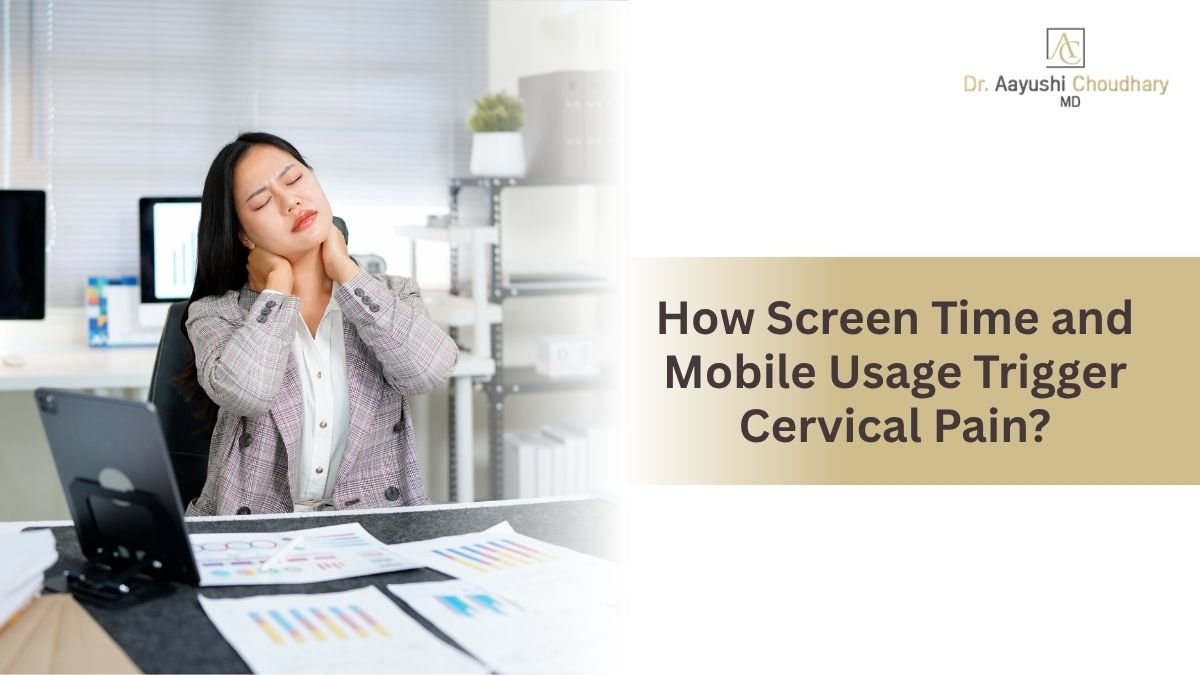
“Do you check your phone immediately after waking up? Spend hours scrolling social media or working on a laptop? Your neck may already be paying the price.”
Modern digital lifestyles have made smartphones and laptops an unavoidable part of daily life. Whether it is office work, online classes, social media scrolling, gaming, or binge-watching shows, most people spend several hours every day looking down at screens. Today, cervical pain is becoming increasingly common even among people in their 20s and 30s. The growing dependence on screens is silently affecting posture, muscles, and spinal health.
What Is Cervical Pain?
Cervical pain refers to pain or discomfort in the neck region, particularly involving the cervical spine. The cervical spine consists of seven vertebrae located in the neck that support the head and allow smooth movement.
The neck also contains cervical muscles, nerves, ligaments, and the spinal cord, all of which work together to maintain posture and movement. When excessive strain, poor posture, or inflammation affects these structures, cervical pain can develop.
Ignoring early neck stiffness today may lead to chronic cervical pain later.
Common causes include:
Prolonged mobile usage
Poor sitting posture
Long laptop working hours
Lack of physical activity
Muscle strain
Ergonomic posture problems
Work-from-home lifestyle habits
How Excessive Screen Time Affects Your Cervical Spine
When using a smartphone or laptop, many people unknowingly bend their head forward for long periods. This creates abnormal pressure on the cervical spine.
A normal human head weighs around 4–5 kilograms. However, when the neck bends forward at an angle while looking at a screen, the pressure on the neck muscles and vertebrae increases significantly.
This constant strain may lead to:
Cervical muscle stiffness
Muscle tension in the neck
Posture imbalance
Inflammation
Neck strain from phone usage
Shoulder pain from mobile use
Chronic cervical discomfort
Small posture changes can make a surprisingly big difference.
What Is ‘Tech Neck’ or Mobile Neck Syndrome?
“Tech Neck” or “Text Neck Syndrome” is a modern condition caused by excessive screen usage and poor posture while using mobile phones, tablets, or laptops.
It develops when the head repeatedly stays tilted downward for prolonged periods. Over time, this affects the cervical spine alignment and increases stress on muscles and nerves.
Screen-related posture problems are now one of the most common digital lifestyle health issues worldwide.
People with text neck syndrome often experience:
Persistent neck pain
Tight shoulder muscles
Reduced neck flexibility
Frequent headaches
Upper back discomfort
Tingling sensations in arms
Modern lifestyles are making cervical pain common even among people in their 20s.
Common Symptoms Caused by Mobile and Laptop Overuse
Excessive screen exposure can trigger several symptoms related to cervical pain and posture imbalance.
Common warning signs include:
Neck stiffness
Neck pain while using laptop
Shoulder pain
Headaches originating from the neck
Reduced neck movement
Tingling or numbness in arms
Muscle fatigue
Burning sensation around shoulders
Pain radiating toward upper back
In some cases, prolonged strain may even contribute to early cervical spondylosis symptoms.
Why Young Adults Are Increasingly Suffering from Cervical Pain
Earlier, cervical pain was mostly seen in older adults. Today, even college students and young professionals are experiencing severe neck discomfort.
Several modern habits are contributing to this trend:
Continuous smartphone usage
Remote working culture
Long gaming sessions
Lack of exercise
Poor workstation setup
Increased screen addiction
Sitting for extended hours
Office work neck pain and work-from-home neck pain have become extremely common after the rise of digital work environments.
Most people spend more time looking down at screens than maintaining proper posture.
How Poor Posture Increases Pressure on the Neck
Poor posture plays a major role in cervical pain development.
Forward head posture occurs when the head shifts ahead of the shoulders instead of staying aligned with the spine. This imbalance increases stress on cervical muscles and vertebrae.
Over time, poor posture may lead to:
Muscle strain
Spinal misalignment
Nerve compression
Chronic inflammation
Reduced spinal flexibility
Ergonomic posture is essential for maintaining spinal health during screen usage.
Real Daily Habits That Make Cervical Pain Worse
Several everyday habits silently worsen cervical pain.
Common harmful habits include:
Using Phone in Bed
Looking downward while lying in bed places excessive strain on the neck.
Long Laptop Hours Without Support
Poor desk setup increases pressure on the cervical spine.
No Screen Breaks
Continuous sitting reduces muscle relaxation and circulation.
Poor Chair Support
Lack of ergonomic support contributes to posture imbalance.
Excessive Social Media Scrolling
Hours of scrolling often happen without people noticing their posture.
Most people don’t realize their daily scrolling habit may be stressing their cervical spine.
Can Cervical Pain Become Serious If Ignored?
Yes. Mild neck pain should never be ignored for long periods.
If untreated, cervical pain can gradually worsen and affect daily activities. In severe cases, prolonged strain may contribute to nerve compression or degenerative cervical spine issues.
Potential complications may include:
Chronic pain
Cervical disc problems
Persistent headaches
Arm weakness
Reduced mobility
Sleep disturbances
Early intervention is always better than waiting for symptoms to become severe.
Best Ways to Prevent Cervical Pain While Using Screens
Preventing cervical pain requires a combination of posture correction and healthy digital habits.
Helpful prevention tips:
Keep screens at eye level
Avoid bending the neck for long periods
Take breaks every 30–40 minutes
Use ergonomic chairs
Stretch regularly
Limit unnecessary screen time
Maintain proper sitting posture
Use external keyboards for laptops
Avoid using phones while lying down
Small posture changes can make a surprisingly big difference.
Exercises and Stretches for Cervical Pain Relief
Certain stretches and exercises may help reduce muscle stiffness and improve neck mobility.
Common cervical pain exercises include:
Neck Rotation Stretch
Slowly rotate the neck from side to side.
Chin Tucks
Helps correct forward head posture.
Shoulder Rolls
Relaxes tight shoulder muscles.
Neck Side Stretch
Improves flexibility in cervical muscles.
Posture Correction Exercises
Strengthen upper back and neck support muscles.
Physiotherapy for cervical pain is often highly effective when combined with posture correction and guided rehabilitation.
Real Case Study – How Excessive Mobile Usage Triggered Severe Cervical Pain in a Young Professional
A 28-year-old IT professional started experiencing constant neck stiffness and headaches after spending nearly 10–12 hours daily on a laptop and smartphone.
Initially, the symptoms seemed minor, but over time, the pain started radiating toward the shoulders and arms. The patient also experienced reduced neck movement and muscle tightness.
After medical evaluation, the patient was diagnosed with early-stage cervical strain caused by prolonged poor posture and excessive screen exposure.
With posture correction, physiotherapy, reduced screen time, ergonomic adjustments, and guided cervical pain exercises, the patient experienced significant improvement within a few weeks.
This case highlights how early lifestyle modifications can prevent long-term spinal complications.
When Should You Consult a Pain Specialist?
You should consult a spine specialist or pain specialist if:
Neck pain lasts for several weeks
Pain radiates to shoulders or arms
Headaches become frequent
Tingling or numbness develops
Neck movement becomes restricted
Pain interferes with work or sleep
Early medical evaluation can help identify underlying cervical spine problems before they become severe.
Non-Surgical Treatments for Cervical Pain
Most cervical pain cases can be managed without surgery.
Common non-surgical cervical pain treatments include:
Physiotherapy
Posture correction therapy
Ergonomic advice
Medications for pain and inflammation
Lifestyle modifications
Pain management procedures
Guided rehabilitation exercises
Non-surgical treatment focuses on reducing pain, improving posture, restoring mobility, and preventing recurrence.
Final Thoughts
Your smartphone may feel harmless, but prolonged screen exposure can silently affect your cervical spine over time.
Your neck supports your head every single day — it deserves better posture, better movement, and regular care.
If you are experiencing persistent neck pain, stiffness, or posture-related discomfort, consulting a qualified spine specialist or pain expert can help you prevent long-term complications and improve your quality of life.
Powered by Froala Editor

About the author
Dr. Aayushi Choudhary
Dr. Aayushi Choudhary is a highly regarded Pain, Musculoskeletal Medicine & Rehabilitation Specialist. She has years of experience in treating conditions such as paralysis, spine disorders, cervical pain, cerebral palsy, knee pain, slipped…
Last updated . If you spot an error, contact our newsroom with the article link and supporting information.