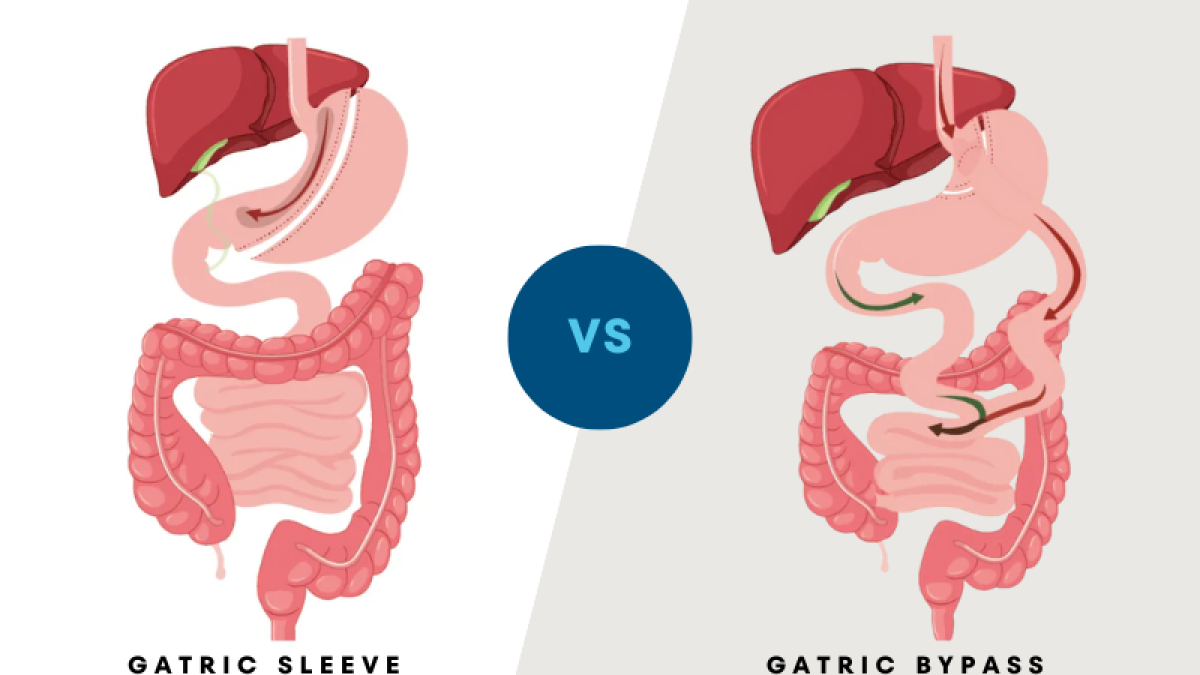
For someone considering weight-loss surgery, the decision rarely comes down to whether to have surgery at all. More often, the difficult question is which procedure to choose. Two operations dominate the field worldwide: sleeve gastrectomy and gastric bypass. Both are safe, well-established and highly effective, yet they work in different ways and suit different people. Understanding how they compare helps patients have a more informed conversation with their surgeon and approach the decision with realistic expectations.
Surgery as a tool, not a shortcut
Before comparing the two, it is worth restating a principle that applies to both. Weight-loss surgery is not an easy way out or a substitute for effort. It is a powerful medical tool that resets the biology working against people with severe obesity, making sustained weight loss achievable where diet and exercise alone have repeatedly failed. The operation opens the door; lasting results still depend on the lifestyle changes that follow.
How sleeve gastrectomy works
In a sleeve gastrectomy, roughly three-quarters of the stomach is removed, leaving a narrow, banana-shaped tube. The procedure works in two ways. First, the much smaller stomach holds far less food, so patients feel full quickly. Second, removing the larger portion of the stomach reduces production of a hormone that drives hunger, so appetite itself diminishes. There is no rerouting of the intestine, which keeps the operation comparatively simple.
Because the digestive pathway remains intact, the sleeve tends to cause fewer issues with vitamin and mineral absorption than procedures that bypass part of the intestine, though supplementation is still required. It has become the most commonly performed bariatric procedure in many countries, valued for its balance of strong results and relative simplicity.
How gastric bypass works
A gastric bypass surgery takes a different approach. The surgeon creates a small stomach pouch and connects it directly to a lower section of the small intestine, bypassing part of the digestive tract. This means patients eat less and also absorb fewer calories and nutrients from what they do eat. The rerouting also produces favourable hormonal changes that can have a particularly strong effect on blood sugar.
This dual mechanism, restriction combined with reduced absorption, often makes the bypass especially effective for people with significant type 2 diabetes or severe acid reflux. The trade-off is that it is a slightly more complex operation and carries a higher lifelong need for careful nutritional monitoring and supplementation.
Comparing the two at a glance
While individual results vary, some general contrasts help frame the decision:
Complexity: the sleeve is technically simpler; the bypass involves rerouting the intestine
Nutrition: the sleeve generally has a lower risk of nutrient deficiency than the bypass
Acid reflux: the bypass often improves reflux, while the sleeve can sometimes worsen it
Diabetes: both help, but the bypass frequently has a stronger and faster effect on blood sugar
Reversibility: neither is easily reversed, but the bypass is anatomically more difficult to undo
Which procedure suits whom?
There is no universally superior operation, only the one that best fits a particular person. A patient with severe reflux or long-standing, poorly controlled diabetes may benefit more from a bypass. Someone seeking a simpler procedure with a slightly lower risk profile, or who has certain other medical considerations, may be better suited to a sleeve. Factors such as starting weight, eating patterns, other health conditions and personal preference all feed into the recommendation.
This is why a thorough pre-operative assessment matters so much. Blood tests, a review of medical history, dietary and psychological evaluation and an honest discussion of goals allow the surgeon to match the procedure to the individual rather than applying a one-size-fits-all approach.
Common questions patients ask
Two concerns come up in almost every consultation. The first is about weight regain: both procedures can lose some of their effect if old eating habits return, though the bypass tends to be slightly more forgiving of dietary slips because of its malabsorptive component. The second is about loose skin after major weight loss, which depends on age, skin quality and the amount of weight lost, and can sometimes be addressed with body-contouring procedures later if it troubles the patient. An honest surgeon will discuss both openly rather than promising a perfect outcome.
Patients also frequently ask how quickly they will see results. With either operation, the fastest weight loss usually occurs in the first six months, gradually slowing over the following year to eighteen months as the body reaches a new stable point. Improvements in conditions like diabetes and blood pressure often appear far sooner, sometimes within weeks, which is one of the most encouraging aspects of metabolic weight-loss surgery.
Recovery and the road ahead
Both operations are usually performed using minimally invasive keyhole or robotic techniques, which means small incisions, less pain and a hospital stay of only a day or two for most patients. The dietary journey afterwards is similar for both: a staged progression from liquids to soft foods to solids over several weeks, with protein intake, hydration and prescribed supplements as daily priorities.
Long-term success with either procedure rests on the same foundation of balanced eating, regular activity and consistent follow-up. Patients who stay engaged with their surgical team and attend regular reviews tend to achieve and maintain the best results, and to catch any nutritional gaps before they become problems.
The decision you should not make alone
Choosing between a sleeve and a bypass is not a decision to make from an internet article, and it is certainly not one to make alone. The right choice depends on a careful, individual assessment by an experienced bariatric surgeon who can weigh the medical details against personal circumstances and goals. What articles like this one can do is prepare you to ask better questions: why one procedure over the other, what the expected results and risks are, and what support will be available in the months and years that follow. Walking into that consultation informed is the best way to arrive at a decision you can feel confident about.
Powered by Froala Editor
You may also like
More from this category.

Vitamin D Deficiency: Signs, Causes, and Why a Simple Test Matters

Why the Skin Turns Yellow: A Clear Guide to Jaundice in Adults

Low Testosterone in Men: The Signs You Shouldn't Ignore and When to Get Tested

Dragon Pharma: Understanding the Brand and Online Buying Experience

Dealing with Bedwetting in Children: Causes, Treatment, and Helpful Tips for Parents
GLP-1 Weight Loss Timeline: What Results Can You Expect

Casino Non AAMS Sicuri Guida Aggiornata tra Regole e Vantaggi

Managing PMS: Tips and Treatments

Guida ai migliori casino non AAMS tra bonus e poker