Carotid Artery Stenosis Treatment in Chandigarh Tips for Better Stroke Prevention
There are seven points which it is important to take into account if you are looking for treatment at the IRFacilities with Dr. Sandeep Sharma.
Story details
- Written by
- IR Facilities
- Published
- Read time
- 5 min
- Reads
- 11
In brief
Article summary
There are seven points which it is important to take into account if you are looking for treatment at the IRFacilities with Dr. Sandeep Sharma.
Carotid Artery Stenosis Treatment in Chandigarh is the result of plaque building up in the carotid arteries and causes the blood vessels which supply the brain to become narrower. If the narrowing is not treated, it could increase the risk of a stroke. The first thing to do when choosing the right treatment for carotid artery stenosis in Chandigarh is to reach an accurate diagnosis, evaluate the seriousness of the blockage, and then discuss the different treatment options with an experienced specialist.
There are seven points which it is important to take into account if you are looking for treatment at the IRFacilities with Dr. Sandeep Sharma.
1. Ensure that the carotid arteries are assessed properly.
The first step is to find out whether or not there is carotid artery stenosis and to evaluate how severe it is; for this purpose doctors may use carotid ultrasound, CT angiography, MR angiography or catheter-based angiography depending on the patient's condition.
If the imaging is accurate, the medical team will know the location of the narrowing and how severe it is and will then be able to plan an appropriate treatment strategy.
As a practical piece of advice, it's not advisable to choose a procedure just because of the percentage of blockage mentioned in the report, since the symptoms, the results of the imaging, the medical history, and the other risk factors are also relevant.
2. Check whether the stenosis is symptomatic.
A person might have symptoms such as a sudden weakness or numbness on one side of the body, trouble with speech, a temporary loss of vision, or other sudden neurological changes, all of which could indicate a TIA or a stroke.
Stenosis leading to symptoms may require a more urgent assessment, since clinical guidelines say that appropriate patients should have an early evaluation following a recent neurological event.
A practical suggestion is that rather than waiting for a routine appointment, you ought to seek immediate medical attention when you have symptoms similar to a stroke.
3. Discuss medical treatment and the management of risk factors
It is not essential to have a procedure in all instances of carotid narrowing. The course of treatment will be determined by how severe the condition is and by the clinical situation and could include controlling blood pressure, managing cholesterol, giving up tobacco, adopting a healthy way of life, and taking the medicines prescribed.
The medical aspect is an important part of the care given to patients with carotid artery disease, regardless of whether or not they eventually require revascularisation.
A useful tip is to make sure that you regularly take your prescribed medicines and attend all your recommended follow-up appointments.
4. Stenting of the carotid artery should be considered if it is appropriate.
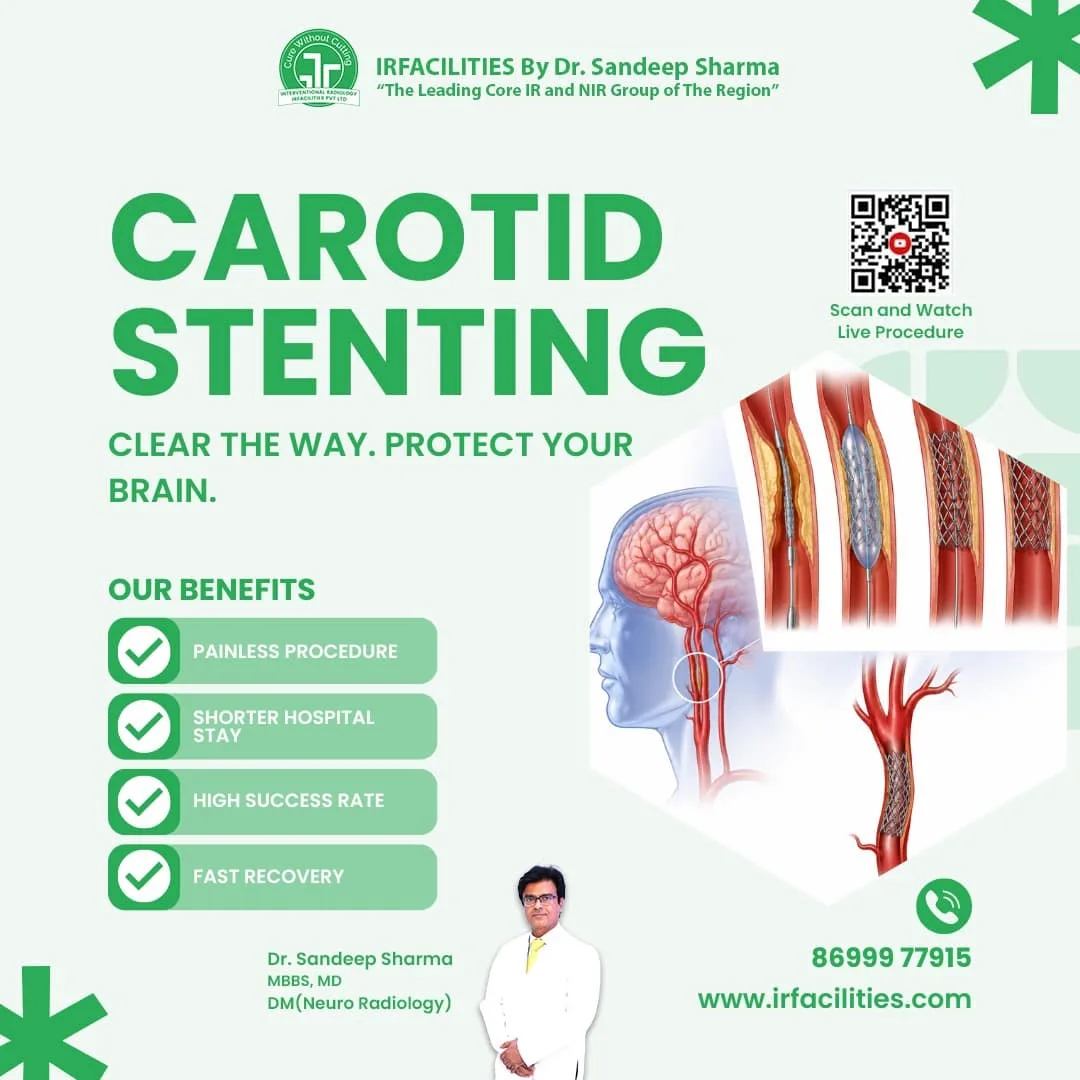
Carotid artery stenting is a minimally invasive method of treatment that uses a catheter to place a stent in the artery which has become narrowed. The stent serves to keep the artery open and to improve blood flow.
The procedure for stenting of the carotid artery is carried out at the IRFacilities in the form of an image-guided treatment, and each patient is individually assessed together with having their treatment plan drawn up. Dr. Sandeep Sharma provides interventional neuroradiology care to patients who are appropriate.
A practical idea is to ask your specialist whether carotid stenting is suitable considering your age, your symptoms, your anatomy, and your surgical risk before you decide that it should be the best option for everyone.
5. To compare stenting and carotid endarterectomy
Carotid endarterectomy (CEA) and carotid artery stenting (CAS) are two distinct procedures for revascularisation; in CEA the plaque is removed surgically while in the case of CAS a stent is inserted by means of an endovascular catheter technique.
Clinical guidelines generally advise carrying out CEA for most patients who have significant stenosis together with symptoms, although in some instances stenting may be considered, particularly when surgery would involve a higher risk or is due to specific anatomical and clinical factors.
A practical suggestion is to discuss both options with your treating specialist before you choose a treatment.
6. Choose an experienced interventional team
Carotid operations require that patients be carefully selected, that a detailed imaging examination be carried out, that appropriate equipment be used, and that experienced specialists be involved. At IRFacilities the treatment method involves a clinical assessment, planning on the basis of imaging, and the performance of minimally invasive interventional procedures.
As a practical recommendation, when you are seeking treatment for Carotid Artery Stenosis in Chandigarh you should consider the specialist's level of experience, the technology on offer, the hospital's support services, the availability of follow-up care, and whether the treatment plan has been tailored to the individual.
After treatment, make a follow-up.
Just because patients receive treatment doesn't mean that future monitoring can be stopped; they may need further examinations and imaging so that the treated artery can be evaluated and other areas of vascular disease can be kept under observation.
Appropriate follow-up care can help in the early identification of any changes and play a role in the long-term management of stroke risk following carotid revascularisation.
A useful tip is to follow your doctor's instructions concerning medication, your way of life, and the imaging tests after treatment.
Conclusion
To get the right treatment for Carotid Artery Stenosis in Chandigarh one has to do more than simply select a procedure; a proper diagnosis must be carried out, the symptoms and the degree of the stenosis must be assessed, medical management must be provided, and the options of stenting and surgery must be carefully compared.
The IRFacilities, managed by Dr. Sandeep Sharma, provide image-guided interventional radiology treatments for suitable patients who have conditions of the carotid artery, and it is essential for patients to undergo a personal medical assessment in order to determine the safest and most appropriate treatment method.
It is important for you or a family member who has been diagnosed with carotid artery narrowing to consult a qualified specialist before coming to a decision about the different treatment options.
About the author
IR Facilities
In the case of IR Facilities, Dr. Sandeep Sharma is an expert in interventional radiology, offering sophisticated, minimally invasive treatments for various diseases through advanced radiological techniques. He is dedicated to providing pr…
Last updated . If you spot an error, contact our newsroom with the article link and supporting information.