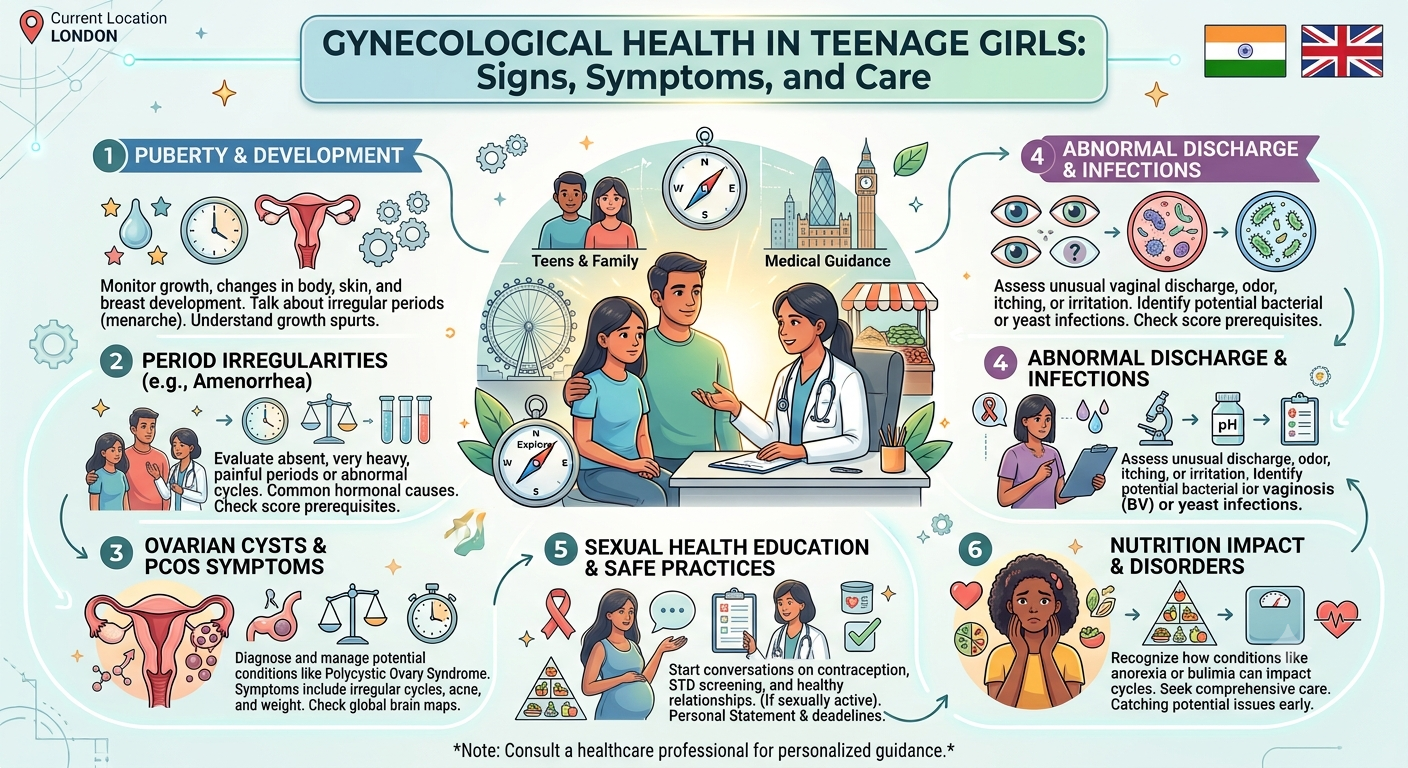
Let’s be honest most of us, as parents, are hyper-focused on grades, college prep, and whether our teenager is hanging out with the right crowd. We track their math scores, their basketball practice, their sleep schedules. But there’s one part of their life that usually gets ignored until she’s curled up in pain or we notice something really off: her reproductive health.
It’s an uncomfortable topic, sure. But in our line of work, we see the fallout of this silence every single day. Young women are navigating a hurricane of hormones, growth spurts, and emotional shifts, yet when it comes to what’s happening "down there," the conversation gets muffled by embarrassment or, honestly, just a lack of straightforward facts. Most families wait until a problem is screaming at them before they pick up the phone. That’s a mistake. Knowledge isn't just power here; it’s a safety net.
The First Visit: Why We Wait Too Long
Here’s a myth we desperately need to bust: gynecological care is not just for married women or sexually active teens. I can’t tell you how many parents tell me, "But she’s too young for that!" The reality, according to standard medical guidelines, is that the first reproductive health visit should happen between 13 and 15.
And relax—it’s not about stirrups or invasive exams. Honestly, at that age, it’s usually just a conversation. It’s a chat in a safe, judgment-free room where she can actually ask the questions she’s too shy to ask you. It normalizes the idea that her reproductive system is just another part of her body that needs preventive care, like her teeth or her eyes. We tell parents to think of it as establishing a "medical home base" for her, a place she knows she can go to later when things get confusing.
Reading the Signals: The Menstrual "Vital Sign"
We treat the menstrual cycle like a mysterious curse, but it’s actually a vital sign—just like blood pressure or heart rate. When the cycle is off, it’s usually the first clue that something internally is misfiring.
Now, for teenagers, irregularity is kind of the norm at the start. Periods might show up every 21 days, then skip to 45 days. That’s usually just her body maturing. But watch out for the extremes. If she’s bleeding through a super-plus pad in under an hour, or passing clots the size of a coin, that’s not "just a heavy flow." If the cramps are so bad she’s missing school or skipping her Friday night hangouts, that is a red flag waving right in your face. We're talking potential hormonal imbalances, endometriosis, or even bleeding disorders like von Willebrand disease. Ignoring that isn't tough love; it's a fast track to anemia and chronic pelvic pain down the line.
The Migraine That Isn't Just a Headache
Something that flies under the radar is the menstrual migraine. It usually hits right before the bleeding starts or in the first couple of days, when estrogen takes a nosedive.
I’ve seen high-achieving students bomb exams not because they didn't study, but because they were battling nausea, light sensitivity, and brain fog that they thought was just a "bad headache." If your daughter is consistently getting debilitating head pain with her period, please don’t brush it off. It is treatable often with magnesium, lifestyle tweaks, or specific meds that stabilize that hormonal drop. She doesn't have to white-knuckle through it.
PCOS: The Diagnosis We're Missing
Look, PCOS (Polycystic Ovary Syndrome) is rampant right now, and it is grossly underdiagnosed in teens. Why? Because the symptoms of acne, weight gain, irregular periods—are too easily dismissed as "typical teenage problems."
Here’s the thing, though: PCOS isn't just about fertility. It’s a metabolic bomb that affects insulin, heart health, and mental well-being for the rest of her life. If she’s putting on stubborn weight around her midsection, dealing with persistent cystic acne, and her periods are all over the map, get a full workup. Catching it early means she can implement diet and exercise changes now to derail a much harder road later.
The Pain Taboo
There is this outdated, almost cruel belief that periods are supposed to hurt. This ingrained notion makes young women suffer in silence with conditions like endometriosis. We hear stories constantly of girls who were told to "take a painkiller and get over it" for years.
Let’s be clear: if the pain is so intense she can't walk, or if she feels sharp pain when going to the bathroom during her period, that is not normal. It's not a rite of passage. It’s a medical condition that needs a specialist. Don't let anyone's teacher, relative, or doctor tell her otherwise.
Stress, Diet, and the Missing Period
We also see a lot of high-performing students who lose their periods entirely during exam season. Stress messes with the HPA axis (the brain-hormone connection) and shuts things down. Combine that with restrictive dieting or over-exercising, and you've got a recipe for amenorrhea.
We love that girls are active, but pushing to the point of losing your period is dangerous—it leaches calcium from bones at an age when they are supposed to be peaking in density. It’s a delicate balance between healthy living and overdoing it, and it’s a conversation worth having at the dinner table.
Filling the Sex Ed Gap
This is the awkward part, but we have to talk about it. When we ask teens where they learn about their bodies, the answer is almost always: the internet, friends, or TikTok. That is terrifying.
We have to move past the awkward "birds and the bees" talk and get clinical. She needs to know about HPV and the vaccine. She needs to know how STIs are transmitted without feeling shamed. This is why having a doctor she trusts—separate from you, her parents is vital. She needs an adult she can ask the "dumb" questions to without feeling embarrassed.
Don't Sit on It
If you’ve read this and thought, "Hmm, my daughter has that heavy bleeding," or "She always complains about that headache," please stop researching symptoms on WebMD. The landscape is complex, and while we can guide you, we can’t run the tests.
This is not a "wait and see" game. The body is sending signals, and we have to listen. If you're in the capital and need clarity, don’t delay. You can call Gynecologist in South Delhi today to get a professional pair of eyes on the situation. Uncertainty just prolongs the suffering. If you're unsure where to even start, just Book an appointment with best gynecologist in south Delhi and get the process moving.
Your daughter's future confidence and physical comfort depend on the choices you make right now. The teenage years are already a battlefield of emotions and changes; let's take the unnecessary burden of "silent suffering" off her shoulders and make this conversation a normal, non-negotiable part of growing up.
Powered by Froala Editor
You may also like
More from this category.

How to Set Up a CBG Plant ;-Under the SATAT Scheme: Complete Process for Entrepreneurs

Best ENT Specialist in Lahore Near Me Johar Town | Dr. Zahra Aleem

Your Ultimate Destination for Canadian Food and Snacks in the USA
Lip Reduction Surgery for Smaller, Balanced Lips

United States Rheumatoid Arthritis Therapeutics Market Biologics, DMARDs & JAK Inhibitors

Global Scopolamine Market Motion Sickness and PONV Treatment Trends

Shower Screens UK: A Complete Guide to Choosing the Right Shower Screen

Vitamin D Deficiency: Signs, Causes, and Why a Simple Test Matters
Why the Skin Turns Yellow: A Clear Guide to Jaundice in Adults