How Can a Dental Practice Management Platform Simplify Your Dental Office?
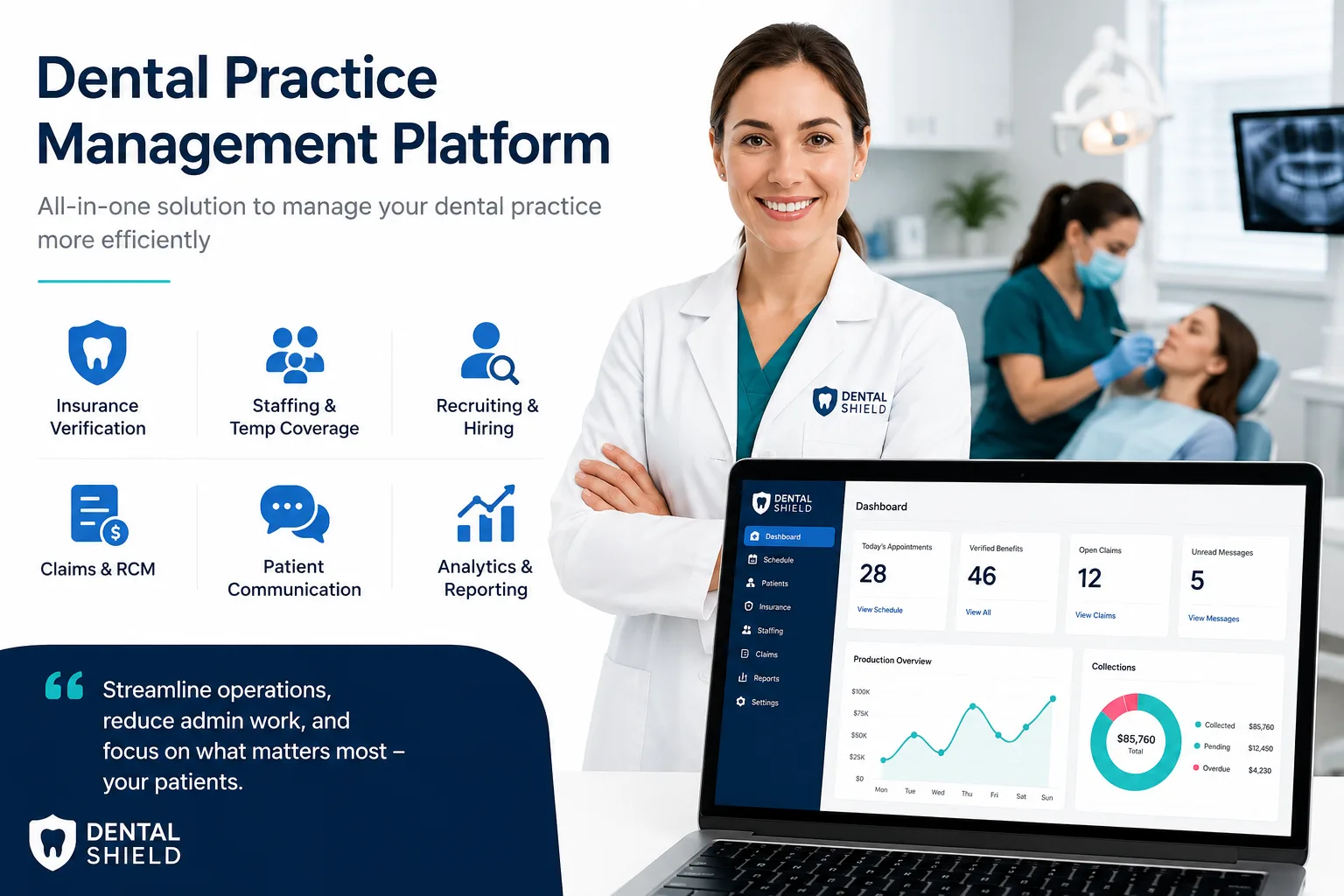
A dental practice management platform brings insurance verification, staffing, recruiting, billing, patient communication, and practice analytics into one connected system, helping dental teams save time, reduce manual work, and manage daily operations more efficiently.
Story details
- Written by
- Marcus Harry
- Published
- Read time
- 7 min
- Reads
- 10
In brief
Article summary
A dental practice management platform brings insurance verification, staffing, recruiting, billing, patient communication, and practice analytics into one connected system, helping dental teams save time, reduce manual work, and manage daily operations more efficiently.
Running a dental practice involves much more than treating patients. Front desk teams manage appointments, insurance information, staffing needs, patient communication, billing, and daily administrative tasks. When these processes are handled through separate tools, it can become difficult to keep everything organized.
A dental practice management platform brings essential workflows together in one system, helping dental practices reduce manual work, improve efficiency, and create a smoother experience for both staff and patients.
For modern dental practices in the United States, having connected technology is becoming increasingly important. Instead of switching between spreadsheets, staffing services, insurance portals, and separate software applications, practices can use one centralized platform to manage their daily operations.
What Is a Dental Practice Management Platform?
A dental practice management platform is a centralized software solution designed to help dental offices manage their operational and administrative workflows.
Traditional dental practice systems often focus primarily on scheduling, patient records, and billing. A modern platform can go further by connecting insurance verification, staffing, recruiting, claims management, analytics, patient communication, and other essential functions.
For a busy dental office, this means staff can spend less time on repetitive administrative work and more time supporting patients.
For example, instead of manually calling an insurance carrier before an appointment, a practice can use automated insurance verification to review eligibility and benefits. Similarly, staffing tools can help practices respond quickly when a hygienist or dental assistant is unexpectedly unavailable.
Why Do Dental Practices Need an All-in-One Platform?
Dental practices deal with multiple operational challenges every day. Insurance verification can take significant staff time, open shifts can be difficult to fill, and billing teams may need to spend hours following up on unpaid or denied claims.
Using separate systems for each task can create disconnected workflows. Information may need to be entered multiple times, employees may need several logins, and practice owners may have difficulty getting a complete picture of their operations.
A dental practice management platform can connect these activities in one environment. This gives practice owners and administrators better visibility while reducing the amount of manual coordination required.
The goal is not simply to add another software tool. The goal is to make existing workflows easier to manage.
How Does a Dental Practice Management Platform Improve Insurance Verification?
Insurance verification is one of the most time-consuming administrative tasks in many dental offices. Staff may need to confirm eligibility, review deductibles, check annual maximums, understand frequency limitations, and identify authorization requirements before a patient appointment.
A modern platform can automate much of this process by connecting with insurance verification services and presenting relevant benefits information in an easy-to-understand format.
This can help front desk teams identify potential coverage issues before treatment begins. It may also reduce the need for repetitive phone calls and manual data entry.
Dental Shield, for example, combines insurance verification with other practice workflows so dental teams can manage important information from one platform.
Can It Help Dental Practices Manage Staffing?
Yes. Staffing is another major challenge for dental offices, especially when a hygienist or dental assistant calls out unexpectedly.
A connected platform can help practices post open shifts, identify available professionals, review credentials, and communicate with candidates. This can make it easier to respond to staffing shortages without relying entirely on traditional agency processes.
A dental temp staffing platform can be particularly useful for practices that regularly need temporary hygienists, dental assistants, or other dental professionals.
Instead of making multiple phone calls to staffing agencies, a practice can post a shift digitally and connect with qualified professionals based on factors such as availability, location, credentials, and experience.
What Is a Dental Temp Staffing Platform?
A dental temp staffing platform is a digital system that connects dental practices with professionals who are available for temporary work.
Unlike traditional staffing agencies, a technology-based platform can provide a centralized workflow for posting shifts, matching professionals, managing communication, and tracking shift information.
For practices, this can make temporary staffing more organized. For dental professionals, it can make it easier to discover available opportunities and choose shifts that fit their schedules.
This approach can be useful for practices dealing with last-minute schedule changes, employee vacations, sick days, or periods of increased patient demand.
How Can These Platforms Support Dental Billing?
Billing and revenue cycle management are critical to the financial health of a dental practice. A claim that is submitted incorrectly or not followed up on can delay payment and increase accounts receivable.
A modern dental practice management platform can connect claim workflows, denial management, payment posting, patient statements, and reporting.
Automated workflows can help identify denied claims and organize follow-up activities. Practice owners can also use reporting tools to monitor collections, outstanding accounts, payer performance, and other financial metrics.
This gives the practice a clearer view of where revenue may be getting delayed.
Can a Dental Practice Management Platform Improve Patient Experience?
The technology used behind the scenes can directly affect the patient experience.
When staff spend less time searching for insurance information or managing disconnected administrative tasks, they have more time to communicate with patients and focus on the front office experience.
Some platforms also support patient communication, online payments, appointment workflows, and digital intake processes.
A more connected workflow can help patients receive faster answers about their insurance coverage, treatment costs, appointments, and payments.
How Does It Help Dental Practice Owners?
Practice owners need more than individual task management. They need to understand how the entire practice is performing.
A centralized platform can provide dashboards that bring operational and financial information together. Depending on the system, owners may be able to review production, collections, staffing activity, insurance performance, and other important metrics.
This can make it easier to identify operational bottlenecks and make informed business decisions.
For multi-location dental groups and DSOs, centralized reporting can be even more valuable because leadership can compare performance across different offices without relying on separate spreadsheets or disconnected systems.
What Should You Look for in Dental Practice Management Software?
When choosing dental practice management software, practices should consider how well the platform fits their existing workflow.
Integration with the current practice management system is important because staff should not have to duplicate information unnecessarily. Security is also essential when handling patient and insurance information.
Practices should also evaluate whether the platform supports features such as insurance verification, staffing, recruiting, claims management, reporting, patient communication, and integrations with commonly used dental systems.
Ease of use matters as well. A powerful platform will have limited value if employees find it difficult to navigate or require extensive training.
Is a Dental Practice Management Platform Suitable for Small Practices?
Yes. Small dental practices can benefit from centralized technology just as much as larger organizations.
A small office may have fewer employees, which means each team member may handle multiple responsibilities. Automating repetitive administrative work can therefore have a meaningful impact on daily productivity.
A platform can help a small practice manage insurance verification, staffing, billing, patient communication, and reporting without requiring separate systems for every task.
As the practice grows, the same technology can potentially scale with additional providers or locations.
How Can Dental Shield Support Modern Dental Practices?
Dental Shield is designed to bring several important dental workflows together in one platform. Its features include AI-powered insurance verification, temporary staffing, permanent recruiting, claims recovery, revenue intelligence, and patient acquisition tools.
By connecting these workflows, Dental Shield can help practices reduce administrative complexity and improve visibility across their operations.
For practices looking to modernize their technology stack, the right dental practice management platform should make everyday work simpler rather than create additional administrative steps.
What Are the Main Benefits of Using a Dental Practice Management Platform?
The biggest advantage is having important practice workflows connected in one place.
A platform can help reduce repetitive administrative work, improve insurance verification, simplify staffing, support billing and claims follow-up, and provide better operational reporting.
It can also help practice owners make decisions using current business information instead of relying on manually updated spreadsheets.
For growing dental practices, this centralized approach can provide a foundation for managing more patients, employees, and locations without increasing administrative complexity at the same rate.
Final Thoughts
A modern dental practice management platform can help dental offices connect the administrative, staffing, insurance, billing, and reporting processes that keep a practice running. Instead of managing multiple disconnected tools, teams can work from a more centralized system.
As dental practices across the United States continue to adopt digital workflows, platforms that combine automation with practical dental-specific tools can help practices save time, improve organization, and focus more attention on patient care.
For practices exploring a more connected approach to daily operations, Dental Shield offers a platform designed around the specific workflows of modern dental practices.

About the author
Marcus Harry
Build your Business contact with me ..
Last updated . If you spot an error, contact our newsroom with the article link and supporting information.