How CBG Plants Can Create a Circular Economy from Organic Waste
Story details
- Written by
- Koshish India
- Published
- Read time
- 4 min
- Reads
- 4
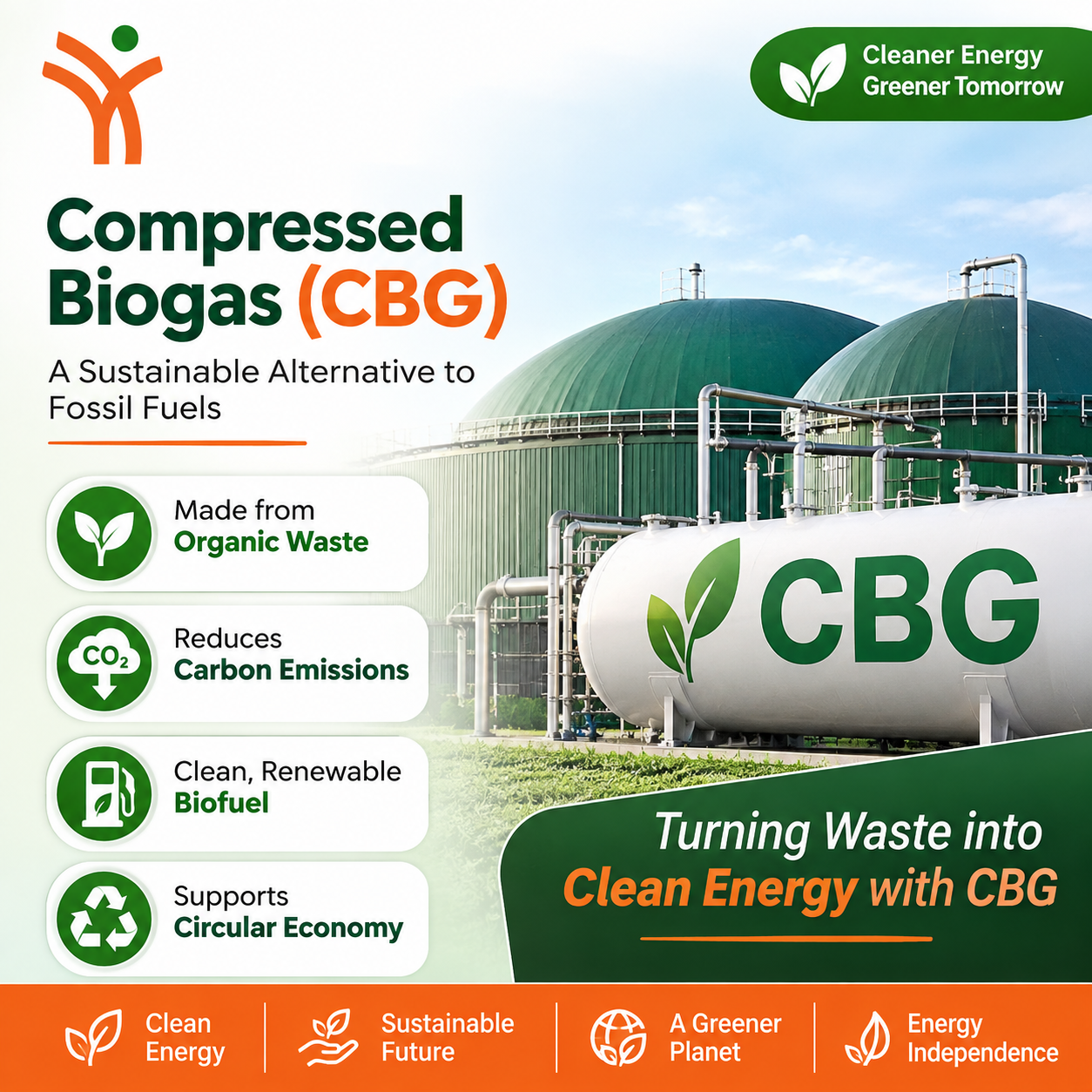
India produces tons of organic waste on a daily basis in the form of agricultural, food industry, hotel, dairy, and municipal waste. If such organic waste is dumped in landfills, it results in the emission of methane gas along with pollution of the environment. CBG plants provide a sustainable alternative to convert organic waste to energy and manure.
This is when the idea of a circular economy plays an essential role because in the form of a Bio-CNG Plant, waste not only becomes a problem but turns into a resource.
What Is a Circular Economy?
The concept of circular economy involves the reuse, recycling, and recovery of raw materials rather than their disposal once their use is over.
With regard to organic waste management, the CBG plants play an integral part in the process in that they ensure that all food waste, agricultural waste, cattle dung, poultry litter, and other forms of organic waste are put to productive uses rather than dumped.
How CBG Plants Convert Organic Waste to Energy
CBG plants employ an anaerobic biological process called anaerobic digestion. In the process, microorganisms degrade the waste material in the absence of oxygen. It comprises the following stages:
Waste collection
Digestion process in the digester
Generation of biogas
Cleaning to get compressed biogas (CBG)
CBG as a fuel for transportation and industry
Digestate as organic fertilizer
This conversion of waste to energy is environmentally friendly, generating renewable energy and fertilizer.
Role of CBG Plants in Reducing Organic Waste
Municipalities, industries, hotels, and farms often face difficulties in disposing of organic waste. CBG plants aid in overcoming this difficulty as they turn organic waste into useful materials. The following are some advantages:
Minimizes waste in landfills
Decreases greenhouse gas emissions
Produces renewable Bio-CNG
Produces organic fertilizers
Increases organic waste management efficiency
Ensures energy security
Rather than incurring disposal costs, companies will make use of their organic waste.
Why Are CBG Plants Important for Sustainable Waste Management in India?
Biodegradable waste is produced in great quantities in India daily. It becomes imperative that there should be proper disposal of such waste to avoid pollution and enhance sanitation levels. CBG Plants play a critical role in orgainc waste management through:
Energy production from waste
Reduced use of fossil fuels
Cleaner urban areas and villages
Rural employment generation
Sustainable agriculture through organic manure
With increasing interest in renewable energy sources in India, CBG Plants have acquired significance in the renewable energy policy of India.
How Government Initiatives Like the SATAT Scheme Support CBG Plants
Various efforts have been made by the Government of India in this direction through schemes like the SATAT (Sustainable Alternative Towards Affordable Transportation).
Under this program, it is aimed to encourage entrepreneurs and industries to set up CBG units by providing them market for compressed biogas. The program also emphasizes the utilization of agricultural waste and other organic residues in the form of renewable energy sources.
Apart from SATAT, various other government programs focusing on organic waste management and renewable energy are contributing to the promotion of CBG technology in India.
Wrapping Up
The use of CBG plants is changing the paradigm of organic waste management to that of converting the waste to energy source and a rich organic fertilizer. It is thus a circular economy where waste converts into a resource. India will thus be able to lower pollution levels, have efficient organic waste management and improve the country’s renewable energy sector through the continued support of initiatives such as the SATAT Scheme.
Frequently Asked Questions (FAQs)
What is a CBG plant?
CBG plant refers to the plant where the waste matter is converted into Bio-CNG (compressed biogas) by undergoing anaerobic digestion and gas purification processes.
What are the wastes that can be processed in the Bio-CNG Plant?
The wastes that can be processed in a Bio-CNG Plant include cattle dung, food waste, agriculture waste, poultry litter, municipal organic waste, and any other biodegradable material.
How do CBG plants facilitate circular economy?
CBG plants help in converting the waste matter into renewable fuel and organic manure by recycling the waste material.
What are the advantages of CBG plants?
They help in reduction of landfill waste, minimize the emission of greenhouse gases, create clean energy/fuel, produce organic manure, and practice sustainable waste management.
How does the SATAT Scheme facilitate CBG plants?
SATAT Scheme helps the Bio-CNG plant to gain market opportunities.
Domestic Biogas , Commercial Biogas , BioGas , Sewage Water Treatment Plant , Effluent Water Treatment Plant , Zero Liquid Discharge Water Treatment Plant
Powered by Froala Editor

About the author
Koshish India
https://koshishindia.in/
Last updated . If you spot an error, contact our newsroom with the article link and supporting information.