A real case published in a clinical study clearly shows how early action can change outcomes.
A 17-year-old boy started noticing hair thinning near his front hairline. At first, he ignored it, thinking it was temporary. Over time, the hair loss became more visible, and his family also started noticing the change. After almost a year, he finally visited a doctor and was diagnosed with early-stage androgenetic alopecia.
Instead of waiting further, the doctor recommended PRP therapy. Over the next several months, he received multiple sessions. Gradually, his hair loss slowed down, new growth appeared, and his condition stabilized. The improvement was not instant, but it was consistent.
This case highlights a simple but important reality.
Hair loss does not become severe overnight, but ignoring it allows the problem to progress quietly until treatment becomes more difficult.
Hair Loss in Pakistan Is Rising Faster Than Expected
Hair loss is no longer limited to older individuals. In cities like Lahore, people in their 20s and early 30s are now facing noticeable thinning.
A 2024 study involving 353 participants in Pakistan found that 76.2% of individuals reported experiencing hair loss. What is more concerning is how people responded to it. Around 45.6% relied on home remedies, while 30.9% did nothing at all.
This shows that most people delay proper treatment.
The same study also identified the most common causes of hair loss:
Stress was reported by 35.1% of participants
Poor hair care practices by 28.9%
Poor diet by 25.2%
Genetic factors by 11%
In a city like Lahore, where lifestyle stress, pollution, and diet issues are common, these factors combine and accelerate hair loss.
Why Doctors Emphasize Early Treatment
Hair loss follows a gradual process, but most people only react when it becomes visible.
In the early stage, hair starts shedding more than usual, but the follicles are still active. As the condition progresses, hair becomes thinner, growth slows down, and follicles begin to weaken. If ignored for too long, some follicles become inactive, which makes regrowth much harder.
According to the American Academy of Dermatology, starting treatment early significantly improves the chances of regrowth. This is why doctors in Lahore now focus on early-stage solutions instead of waiting for advanced baldness.
What Is PRP Hair Treatment and How Does It Work?
PRP, or platelet-rich plasma therapy, is a treatment that uses your own blood to support hair growth.
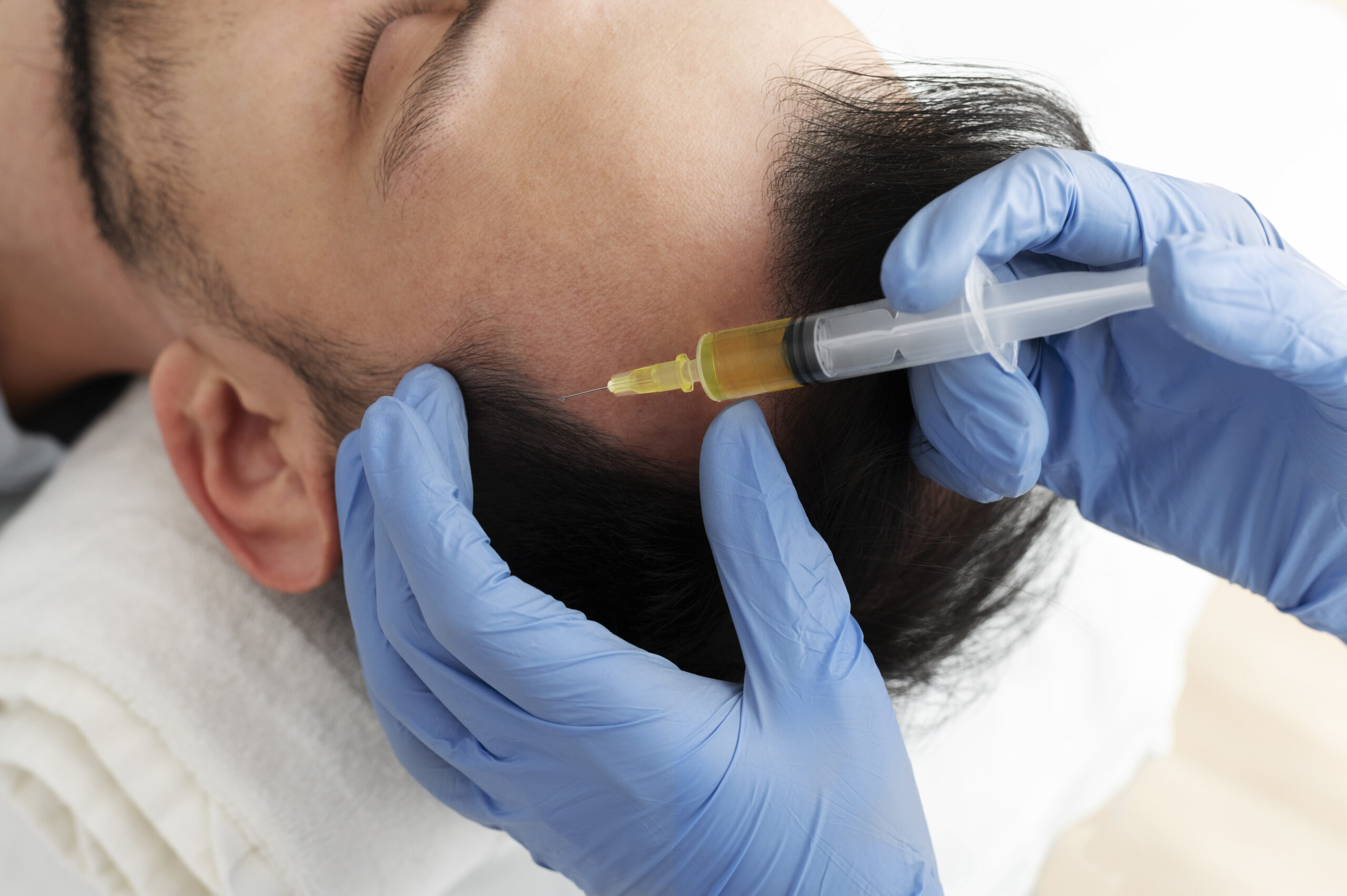
The process is simple but effective. A small amount of blood is taken from your arm, similar to a routine test. This blood is then placed in a machine that separates platelet-rich plasma from other components. The concentrated plasma is then injected into areas of the scalp where hair thinning is present.
Platelets contain growth factors that help repair tissues and improve blood flow. When injected into the scalp, they stimulate weak hair follicles and support healthier hair growth.
Doctors often explain it in a simple way.
Your body already has the ability to repair itself. PRP just delivers those healing components directly to your hair roots.
Why PRP Works Best When You Act Early
One of the biggest misunderstandings about PRP is that it can regrow hair in completely bald areas.
That is not how it works.
PRP is most effective when hair follicles are still alive but weak. In early stages of hair loss, follicles can still respond to stimulation. PRP helps strengthen them, improve blood supply, and extend their growth phase.
However, if follicles have already become inactive, the results may be limited. This is why timing plays such an important role in treatment success.
What Does Research Say About PRP Results?
After going through hours of research, the evidence around PRP is quite clear and balanced.
A 2024 meta-analysis that reviewed 10 clinical trials with 318 patients found that PRP significantly improved hair density. On average, patients experienced an increase of around 25 hairs per square centimeter.
Another 2025 analysis compared PRP with minoxidil. It found that both treatments produced similar results in many cases, but PRP had higher patient satisfaction and performed better in reducing hair shedding.
In Pakistan, a clinical study involving 50 patients showed that 72% experienced satisfactory results after just three sessions over 12 weeks. The results were especially better in younger patients and those who started treatment early.
This shows that PRP is not a miracle solution, but it is a scientifically supported treatment when used at the right stage.
What Doctors in Lahore Are Seeing in Real Practice
Doctors in Lahore report a very common pattern among patients.
Most people delay treatment and try home remedies first. They use oils, shampoos, or online solutions without understanding the actual cause of their hair loss.
By the time they visit a clinic, the situation has already progressed.
At that stage, PRP can still help reduce further loss and improve hair quality, but the results may not be as strong as they would have been in earlier stages.
This is why specialists keep repeating the same advice.
Do not wait until the problem becomes visible to others.
Why PRP Is Becoming a Preferred Option
PRP is gaining popularity because it aligns with what most people are looking for today.
It is non-surgical, natural, and requires minimal recovery time.
The treatment uses your own blood, which reduces the risk of side effects. The procedure is quick, usually taking about one to one and a half hours, and patients can return to their routine immediately after the session.
For people who want to avoid surgery and still take action, PRP becomes a practical option.
What to Expect During and After Treatment
Many people feel uncertain before their first PRP session, but the process is straightforward.
During the procedure, patients may feel mild discomfort due to injections, but it is generally manageable. After the session, there may be slight redness or swelling, which usually fades within a few hours.
Doctors typically recommend multiple sessions because PRP works gradually. The results build over time, and consistency plays an important role in achieving visible improvement.
PRP vs Hair Transplant: Understanding the Difference
PRP and hair transplant are often compared, but they serve different purposes.
PRP is suitable for individuals who are experiencing early hair thinning and want to strengthen existing hair. It focuses on improving the health of hair follicles.
Hair transplant, on the other hand, is used when hair follicles are no longer active. It involves moving hair from one part of the scalp to another.
In many cases, doctors combine both treatments. PRP is often used after a transplant to improve healing and enhance results.
Where to Learn More About PRP in Lahore
If you are considering treatment, it is important to understand the process in detail before making a decision.
You can explore more about prp hair treatment in lahore. This resource explains the treatment, benefits, and expectations in a clear and practical way.
The Biggest Mistake People Make
The biggest mistake is not the hair loss itself.
It is ignoring it.
Hair loss is a progressive condition. It does not stop on its own. The longer you wait, the weaker your hair follicles become, and the fewer options remain available.
Most people only take action when hair loss becomes clearly visible, but by that time, recovery becomes more difficult.
Don’t Wait Until It’s Too Late to Treat Hair Loss
Hair loss is becoming increasingly common, especially among younger individuals in cities like Lahore.
The data shows that most people either ignore the problem or rely on ineffective solutions. At the same time, research also shows that early treatment significantly improves outcomes.
PRP is not a quick fix, but it is one of the most practical and natural solutions available today.
If you are noticing early signs of hair thinning, this is the right time to act.
Because once hair follicles are gone, bringing them back becomes much harder.
And that is why doctors continue to emphasize one simple message.
Start early, stay consistent, and protect your hair before it is too late.
Powered by Froala Editor
You may also like
More from this category.

How Creatine Supports Strength, Energy, and Workout Performance

Why Obesity Is Increasing in Pakistan | Causes, Risks, and Prevention

Job Application API: How It Works and What It's Actually Good For

The Gut Microbiome and Nutrition: What Your Diet Is Really Doing Inside the Digestive System

When Do You Need a Neurosurgeon in Jaipur? Signs, Conditions and Treatments

Dedicated Child Specialist Doctor in Lahore – Dr. Ghazala Hafeez Butt

Discover Fat Transfer Surgery Experts in Dubai

Cabinet Repair and Restoration: How to Restore Wood Cabinets and Bring Back Their Beauty

How to Choose the Right Autism Treatment Center in India: A Parent’s Complete Guide