Understanding the Hidden Dangers of Co-Dominant Stems in Mature Hardwoods
Story details
- Written by
- Amazing Tree Service
- Published
- Read time
- 4 min
- Reads
- 4
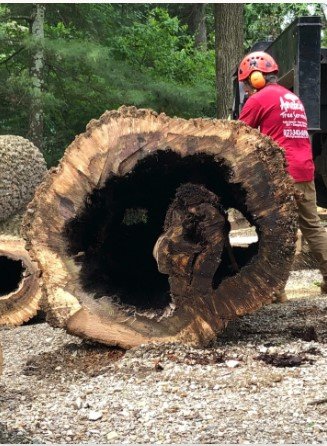
When observing the architecture of mature hardwoods, symmetry is often mistakenly equated with structural stability. Homeowners look at a massive trunk that perfectly splits into two equally sized, upward-reaching stems and assume the organism is healthy and well-balanced. In the field of arboriculture, this specific physical formation is known as co-dominant stems, or a V-crotch, and it represents one of the most dangerous and inherently weak structural defects a plant can develop. While the V-shape might look majestic from a distance, the exact point where the two massive stems meet is highly prone to catastrophic failure under the weight of heavy foliage or severe weather conditions.
To understand why this formation is so dangerous, you must look closely at how the wood actually grows at the junction point. In a strong, healthy attachment, a smaller branch grows out of the side of a larger main trunk, forming a tough, interwoven collar of connective tissue. In a co-dominant structure, both stems are growing upward at the exact same rate, constantly competing for space. As they expand in girth year after year, they push tightly against each other. The bark on the inside of the V-shape becomes permanently trapped between the two stems. This trapped bark, scientifically referred to as included bark, prevents the wood from ever fusing together into a solid joint.
Because the two stems are not physically fused, they act as entirely separate mechanical levers blowing independently in the wind. When a strong gust of wind hits the canopy, one stem is pushed aggressively in one direction while the other stem is pulled in the opposite direction. The massive physical force of this opposing movement creates extreme tension directly at the weak, unattached V-crotch. During a severe winter ice storm, the problem is compounded when freezing water collects in the narrow gap between the stems. The water expands as it turns to solid ice, acting exactly like a steel wedge driving the two massive halves of the organism apart.
Recognising the early warning signs of an impending split gives property owners a brief window to take corrective action. You must regularly inspect the narrow junction where the two stems meet. If you see a visible crack forming in the bark directly below the V, or if dark, foul-smelling liquid is slowly oozing from the joint, the internal wood has already begun to separate. Bringing in a highly trained tree service company near me immediately is absolutely critical to prevent the entire structure from tearing itself completely in half and crashing down onto your house or driveway.
Correcting this severe structural defect requires the installation of professional mechanical support systems high up in the canopy. Specialists do not simply bolt the weak crotch together at the bottom. Instead, they climb high into the upper branches and install highly flexible, high-tensile steel cables between the two opposing stems. These cables act exactly like a shock absorber. They allow the stems to move naturally and gently in the breeze, but they physically restrict the stems from bending far enough apart to split the weak junction at the base. This specific cabling technique effectively unifies the entire canopy, forcing the two separate levers to move together as one solid, cohesive unit.
Managing co-dominant stems is an ongoing, long-term commitment to property safety. The steel cables must be inspected regularly to ensure they remain perfectly tensioned as the wood continues to expand over the years. In some extreme cases, rigid steel bracing rods must also be drilled directly through the lower trunk to provide an extra layer of fail-safe protection. By understanding the biological weakness hidden inside a V-crotch and applying the correct mechanical support systems, you can safely preserve the majestic beauty of your oldest hardwoods while entirely neutralizing the threat of a sudden, catastrophic structural failure.
Conclusion
Co-dominant stems create a highly deceptive structural weakness due to the presence of included bark trapped between the massive wooden limbs. This weak junction is incredibly susceptible to splitting violently during high winds or heavy ice accumulation. Installing professional steel cabling high in the canopy unifies the structure and effectively prevents a catastrophic failure.
Call to Action
Prevent your majestic hardwoods from splitting down the middle by scheduling a structural cabling assessment today.
Visit: https://atreeservicenj.com/
Powered by Froala Editor

About the author
Amazing Tree Service
Contributor to TVL Health by The Viral Lines.
Last updated . If you spot an error, contact our newsroom with the article link and supporting information.