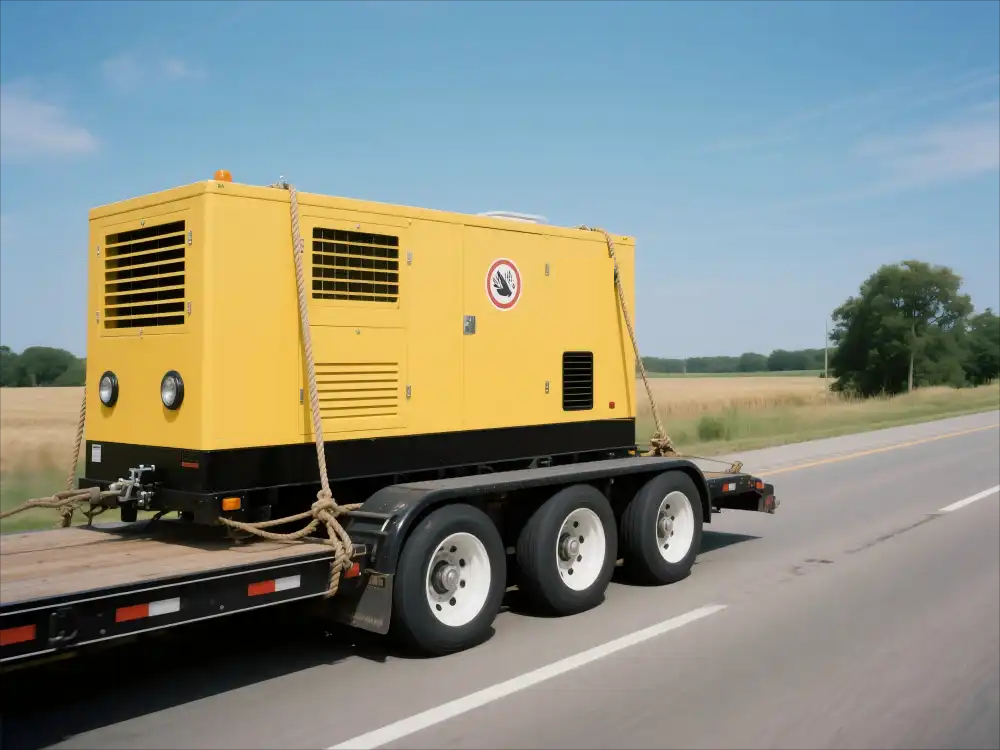
In the modern commercial landscape of 2026, the concept of a "tolerable power outage" has completely vanished. Whether you are running a high-frequency trading desk, a critical medical facility, or a multi-stage automated assembly plant, a loss of electrical sync for even a fraction of a second is an immediate financial hit. Designing for true "Zero Downtime" requires shifting away from basic standby hardware and moving toward an architecture of continuous, active power bridging. Most facilities install a heavy-duty Diesel generator in a shed out back and assume their disaster-recovery plan is complete. But a raw engine is slow; it takes time to crank, find its RPM, and stabilize its voltage. True continuity is a game of micro-seconds, handled by interlocking layers of hardware that keep the electrical frequency dead flat while the main utility grid falls apart around you.
The Architecture of "Active-Bridge" Topology
The biggest mistake in traditional backup design is relying on a "Passive Standby" system. That’s where your equipment sits dead until the utility grid goes out, then tries to turn on. By the time the contacts slam shut, your server stacks have already crashed, and your automated machinery has lost its positional memory.
Zero downtime requires Active-Bridge Topology. In this setup, your critical loads are permanently decoupled from the raw utility grid. The incoming street power doesn't feed your machines; it feeds a massive, continuous-duty inverter block. This block constantly strips down the dirty AC power from the road, turns it into clean DC, and then reconstructs a perfect, laboratory-grade Pure Sine Wave to run your facility. When the street grid drops out, there is no "switch-over" because the inverter is already running the show. The system simply pulls energy from its internal buffer to bridge the gap while the secondary mechanical power sources wind up.
Kinetic "Flywheel-Injection" Buffering
Chemical battery banks are the standard choice for short-term power bridging, but in 2026, heavy industrial sites are moving toward Kinetic Flywheel-Injection. Large chemical battery arrays have massive downfalls: they degrade in high temperatures, require massive HVAC setups to keep from catching fire, and take up huge amounts of real estate.
A kinetic flywheel system uses a solid steel rotor spinning inside a vacuum chamber on magnetic bearings at upwards of 30,000 RPM. It stores energy purely as physical motion.
The Injection: The moment the grid voltage dips by even 2%, the flywheel's magnetic drive instantly converts that rotational momentum into thousands of amps of clean electricity.
The Timeline: It provides up to thirty seconds of high-output power—plenty of time for your secondary mechanical engines to fire up and take the load. There are no chemicals to decay, no fire hazards, and the system can cycle ten thousand times a day without losing a single watt of capacity.
"Isochronous" Bus Paralleling
When you have a massive facility, a single backup engine won't cut it. You need a fleet of them working together. But putting multiple independent power sources onto the same electrical bus is like trying to merge two speeding trains on the same track; if their timing is off by a hair, the whole system explodes.
Continuous design uses Isochronous Bus Paralleling. Instead of letting each machine run on its own internal clock, a centralized digital master controller forces the governors of every engine to lock their sine waves into perfect synchronization before they connect to the main load. If one machine picks up a slight vibration or struggles with an oil pressure dip, the master controller dynamically shifts the electrical "angle" of the other engines to compensate. This keeps your frequency pegged exactly at 50Hz or 60Hz, preventing the microscopic voltage ripples that cause sensitive industrial robotics to trip out on safety faults.
The "Dual-Feed" Symmetrical Isolation Protocol
True zero-downtime engineering assumes that everything will fail eventually, including your own switchgear. If a main circuit breaker inside your building seizes up or blows a weld, it doesn't matter how good your generators are; the power can't physically reach your machinery.
The fix is Dual-Feed Symmetrical Isolation. This means running two entirely independent electrical pathways through your building, right down to the individual machine level. Every critical piece of hardware is fitted with dual power supplies fed from separate distribution boards on opposite sides of the room.
Path A: Feeds from the primary active inverter line.
Path B: Feeds from an independent, secondary backup bus.
If a maintenance tech drops a wrench into a breaker cabinet on Path A, causing a massive short circuit, the machine doesn't blink. It automatically draws 100% of its needs from Path B instantly through internal high-speed diodes. You can literally tear down half the building's electrical system for maintenance while the factory keeps running at full capacity.
Dynamic Harmonics: Fighting the "Reflected" Power
In 2026, the biggest threat to your power system isn't the utility company; it’s your own gear. Modern industrial machinery uses heavy non-linear loads like variable speed drives and massive LED arrays. These devices "corrupt" the electricity, sending wild, messy frequencies back into your own power lines. This is known as Reflected Harmonic Distortion.
When your system drops off the main grid and moves onto its own isolated backup loop, these harmonics can cause your standby engines to overheat, confuse digital controllers, and burn out electric motor windings. A zero-downtime build requires Active Harmonic Filters (AHFs) mounted directly at the main distribution nodes. These filters act like noise-canceling headphones for your electricity. They read the messy, distorted waves coming back from your machines and instantly inject an equal and opposite electrical charge to flatten the noise. It keeps the power inside your island loop perfectly clean, protecting your backup hardware from being fried by your own production line.
The Bottom Line
Designing a power system for zero downtime isn't about buying the biggest piece of emergency iron you can find and parking it in the yard. It’s about managing the micro-seconds.
By utilizing Active-Bridge Topology, anchoring your system with Kinetic Flywheels, and enforcing Dual-Feed Symmetrical Isolation, you create an electrical fortress that is completely immune to the outside world. Keep the lines clean, keep the phases locked, and let the physics protect your margin.
Powered by Froala Editor
You may also like
More from this category.

Locksmith: Fast and Reliable Locksmith Support

Experience Bold Fashion with Premium Affliction Clothing

Company Registration in Delhi NCR: What Entrepreneurs Should Know
China Ultrafast Laser Market The Next Wave of High-Speed, High-Accuracy Manufacturing

Canada Flavour Market Decoding the Flavour Trends Driving Product Innovation

How Much Money Do I Need to Establish a Company in Dubai?

Typography Tips for Better Website Design

Casino Non AAMS: Guida a Giochi Licenze e Bonus
Streamlining Your Application Strategy with Advanced Writing Platforms