Sleep Hygiene Hacks for Better Rest
Story details
- Written by
- Live Nu Life
- Published
- Read time
- 5 min
- Reads
- 3
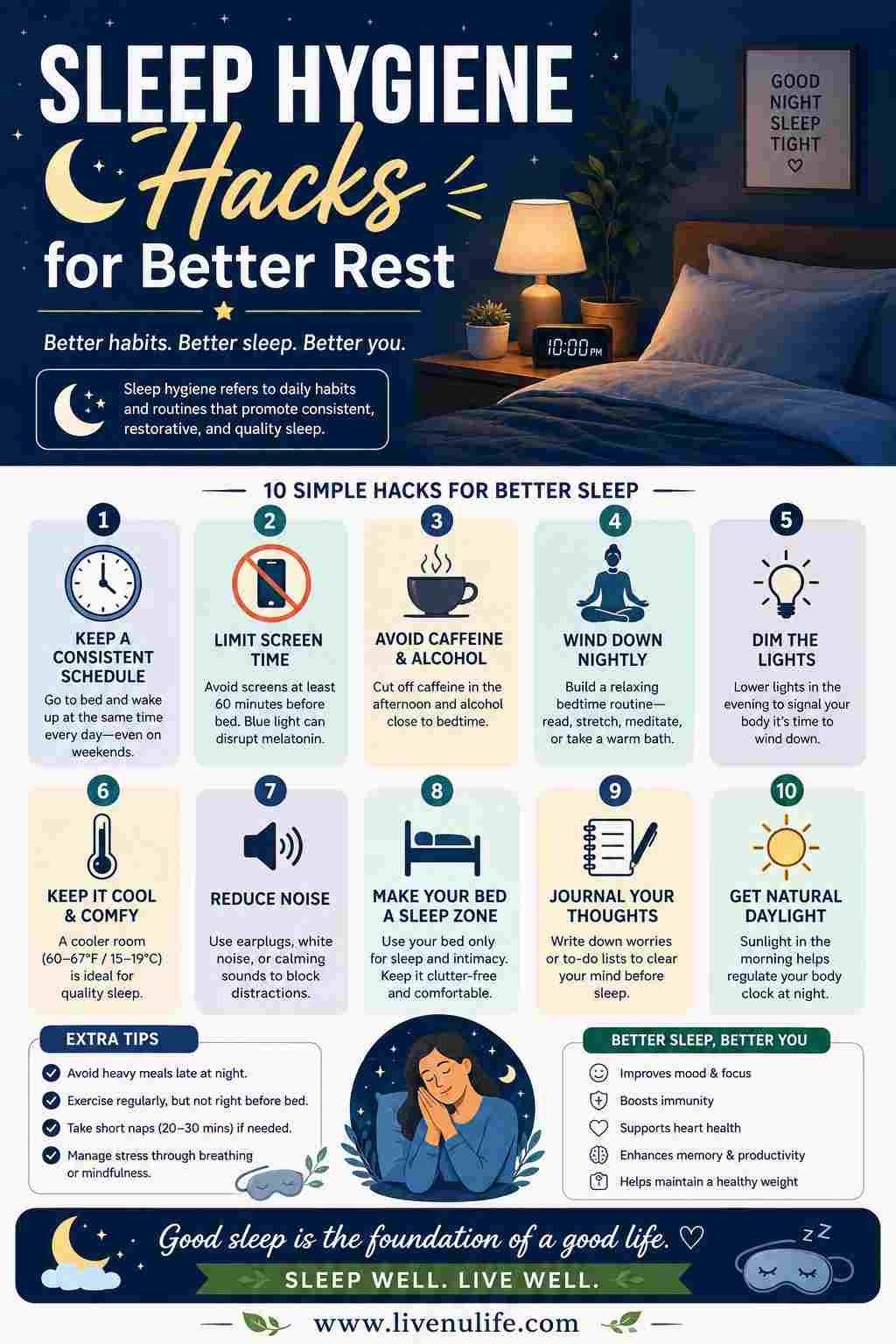
Getting quality sleep is no longer a luxury — it’s essential for your physical health, mental clarity, and emotional well-being. Yet millions of people struggle with poor sleep habits, insomnia, nighttime anxiety, and constant fatigue. If you often wake up tired even after spending hours in bed, improving your sleep hygiene may be the solution.
The good news is that small lifestyle changes can make a huge difference. By following effective sleep hygiene hacks for better rest, you can improve your sleep quality naturally and wake up feeling refreshed and energized.
What Is Sleep Hygiene?
Sleep hygiene refers to healthy habits and routines that help you fall asleep faster, stay asleep longer, and improve overall sleep quality.
Good sleep hygiene includes the following:
Maintaining a consistent sleep schedule
Creating a relaxing bedtime routine
Reducing screen time before bed
Optimizing your sleep environment
Poor sleep hygiene, on the other hand, can lead to insomnia, daytime fatigue, brain fog, and reduced productivity.
Why Quality Sleep Matters
Your body repairs and restores itself during sleep. Without enough rest, both your physical and mental health suffer.
Benefits of good sleep:
Better concentration and memory
Improved immune system function
Reduced stress and anxiety
Increased energy levels
Better mood and emotional balance
Healthy weight management
That’s why improving your sleep quality naturally should be a priority.
Best Sleep Hygiene Hacks for Better Rest
1. Stick to a Consistent Sleep Schedule
One of the most effective sleep hygiene tips is going to bed and waking up at the same time every day—even on weekends.
Your body operates on a natural internal clock called the circadian rhythm. Irregular sleep schedules confuse this rhythm and make it harder to fall asleep.
Try this:
Set a fixed bedtime
Wake up at the same time daily
Avoid sleeping in excessively on weekends
Consistency trains your body to sleep more efficiently.
2. Reduce Screen Time Before Bed
Blue light from phones, laptops, and TVs suppresses melatonin — the hormone responsible for sleep.
Scrolling social media or watching videos before bed overstimulates your brain and delays sleep onset.
Better alternatives:
Read a book
Practice meditation
Listen to calming music
Journal your thoughts
Experts recommend avoiding screens at least 30–60 minutes before bedtime.
3. Create a Relaxing Bedtime Routine
Your brain needs signals that it’s time to wind down.
A calming nighttime routine can improve sleep quality and reduce nighttime anxiety.
Relaxing bedtime activities:
Warm shower or bath
Deep breathing exercises
Gentle stretching
Herbal tea (caffeine-free)
Gratitude journaling
These habits help your body transition into sleep mode naturally.
4. Optimize Your Sleep Environment
Your bedroom environment directly affects how well you sleep.
For better sleep:
Keep your room cool and dark
Use blackout curtains
Reduce noise levels
Invest in a comfortable mattress and pillows
Keep your bedroom clutter-free
A clean and peaceful sleep environment promotes deeper rest.
5. Avoid Caffeine Late in the Day
Caffeine can stay in your system for several hours and interfere with sleep.
Common hidden sources:
Coffee
Energy drinks
Tea
Chocolate
Soft drinks
To improve sleep hygiene, avoid caffeine at least 6–8 hours before bedtime.
6. Exercise Regularly
Physical activity helps regulate your sleep cycle and reduces stress.
Best exercises for better sleep:
Walking
Yoga
Cycling
Strength training
However, avoid intense workouts too close to bedtime, as they may increase alertness.
7. Manage Stress and Anxiety
Stress is one of the biggest causes of poor sleep and insomnia.
Overthinking keeps your brain active when it should be relaxing.
Stress management techniques:
Meditation
Mindfulness exercises
Deep breathing
Writing down worries before bed
Improving mental relaxation is essential for restful sleep.
8. Limit Daytime Naps
Long naps during the day can disrupt nighttime sleep patterns.
If you need a nap:
Keep it under 30 minutes
Avoid late afternoon naps
Short power naps can help without affecting nighttime rest.
9. Watch What You Eat Before Bed
Heavy meals late at night can cause discomfort, acid reflux, and poor sleep.
Better nighttime snack options:
Banana
Almonds
Yogurt
Warm milk
Avoid spicy, greasy, or sugary foods close to bedtime.
10. Get Natural Sunlight During the Day
Sunlight helps regulate melatonin production and supports a healthy circadian rhythm.
Try to:
Spend time outdoors daily
Open curtains in the morning
Take short walks in sunlight
Natural light exposure improves nighttime sleep quality.
Common Signs of Poor Sleep Hygiene
You may have unhealthy sleep habits if you experience:
Difficulty falling asleep
Frequent nighttime waking
Morning fatigue
Daytime sleepiness
Irritability and mood swings
Brain fog or poor concentration
Improving your sleep habits can significantly reduce these symptoms.
Long-Term Benefits of Better Sleep Hygiene
When you consistently practice healthy sleep habits, you may notice:
More energy throughout the day
Better productivity and focus
Improved emotional stability
Stronger immune health
Reduced risk of chronic illnesses
Quality sleep improves nearly every aspect of your life.
Final Thoughts: sleep hygiene hacks for better rest
Improving your sleep doesn’t always require medication or complicated routines. Sometimes, small lifestyle adjustments create the biggest results.
By following these sleep hygiene hacks for better rest, you can naturally improve sleep quality, reduce stress, and wake up feeling refreshed and restored.
Start with one or two changes, stay consistent, and give your body time to adjust. Better sleep begins with better habits.
In a world that constantly pushes you to do more, achieve more, and compare more, it’s easy to overlook what you already have. That’s where gratitude journaling comes in — a simple yet powerful practice that helps you shift your focus from what’s missing to what truly matters.
FAQ
1. What is sleep hygiene?
Sleep hygiene refers to healthy habits and routines that improve sleep quality and help you rest better.
2. How can I fall asleep faster naturally?
Reduce screen time, create a relaxing bedtime routine, and maintain a consistent sleep schedule.
3. Does blue light affect sleep?
Yes, blue light suppresses melatonin production and can make it harder to fall asleep.
4. What foods help improve sleep?
Foods like bananas, almonds, yogurt, and warm milk may support better sleep.
5. How many hours of sleep do adults need?
Most adults need around 7–9 hours of quality sleep each night.
Powered by Froala Editor

About the author
Live Nu Life
Live Nu Life is a holistic wellness platform dedicated to helping you feel better naturally. We share practical insights on nutrition, gut health, mindfulness, sleep, and lifestyle habits that support balance, vitality, and long-term well-…
Last updated . If you spot an error, contact our newsroom with the article link and supporting information.