There are household problems that announce themselves loudly and immediately — and then there are the ones that creep up slowly, growing worse by the day until they can no longer be ignored. A dead possum inside your ventilation system firmly belongs to the second category. The signs are rarely dramatic at first. A faint smell that comes and goes. A slight increase in fly activity near a vent. A vague sense that something is not quite right with the air quality in your home. But left unaddressed, these subtle early indicators escalate into a whole-home health issue that affects every room the system serves. For homeowners across Melbourne's south-eastern suburbs, the professional expertise behind Dead Possum Removal Berwick services exists precisely because possums dying inside ventilation infrastructure is a far more common occurrence than most people realise — and the consequences of a delayed response are invariably more serious than those of acting promptly.
Why Possums End Up Inside Ventilation Systems
Before exploring the warning signs, it is worth understanding the pathway that leads a possum into a ventilation system in the first place. Possums do not wander into ductwork accidentally — they are motivated by a specific set of environmental drivers that make enclosed infrastructure genuinely attractive to them.
The common brushtail possum, which is the species most frequently encountered in suburban Melbourne, is a naturally cavity-dwelling animal. In its native bush habitat, it relies on tree hollows for shelter, rest, and raising young. In urban environments, where tree hollows are scarce, possums adapt readily to the built environment — using roof cavities, wall voids, and ventilation infrastructure as functional substitutes for the hollows they would otherwise occupy.
Ventilation systems offer a combination of features that possums find highly appealing: darkness, protection from weather and predators, relative warmth in cooler months, and an elevated position that aligns with the possum's natural preference for height. Entry is typically gained through external vent outlets with damaged, deteriorated, or absent covers, through gaps where ductwork connects to external grilles, or through openings in roof spaces where flexible ducting has developed disconnections over time.
Once inside, a possum may navigate a surprisingly long distance through the duct network before becoming disoriented, trapped, or exhausted. Without food, water, or a clear exit route, the animal eventually dies — in whichever section of the system it last occupied, which may be deep within a main trunk duct, inside a branch run, or directly behind a supply or return air grille.
Warning Sign One: A Persistent and Worsening Odour From Your Vents
The most reliable and unmistakable indicator of a dead possum in a ventilation system is a foul, pervasive odour that emerges directly from vent outlets when the system is operating. This is categorically different from the musty smell that sometimes accompanies an air conditioning system that has not been serviced for some time — the odour of decomposition is distinctive, heavy, and sweet-putrid in a way that most people recognise instinctively as biological in origin.
In the early stages — typically the first 24 to 72 hours after death — the odour may be relatively subtle and intermittent, noticeable only when the system first starts up or when standing directly near a vent outlet. As decomposition progresses through days four to ten, the smell intensifies dramatically and becomes impossible to ignore, permeating furniture, soft furnishings, clothing, and building materials throughout the home.
The directional nature of the smell is an important diagnostic tool. If the odour is strongest near specific vent outlets — or if it is present when the system runs but fades when it is switched off — this strongly points to the source being within the duct system itself rather than in the roof void or another adjacent space. Note which vents produce the strongest odour, as this information is valuable for the technician who will ultimately locate and remove the carcass.
Warning Sign Two: Unusual Fly and Insect Activity Around Vent Outlets
Blowflies possess an extraordinary sensitivity to the odour compounds released by decomposing organic matter and will locate a carcass — even one concealed inside ductwork — with remarkable speed and accuracy. If you notice clusters of blowflies gathering around specific vent grilles, appearing to emerge from within the vent itself, or congregating on walls and ceilings near vent outlets, this is a strong and urgent indicator of decomposing matter within the system.
The presence of maggots around vent grilles or on floors directly beneath them is an even more advanced warning sign indicating that decomposition is well underway and that the blowfly lifecycle is already in progress within the ductwork. At this stage, the situation demands immediate professional attention — not only to remove the carcass but to address the fly infestation that has established itself within the duct system.
It is worth noting that fly activity associated with a duct-located carcass tends to be concentrated and directional — clustered around specific outlets rather than distributed generally throughout the home. This concentration pattern helps distinguish a duct-related decomposition problem from a more diffuse infestation source elsewhere in the property.
Warning Sign Three: Deteriorating Air Quality and Respiratory Symptoms
A ventilation system with a decomposing animal inside it does not simply smell unpleasant — it actively distributes biological contaminants, decomposition gases, and potentially harmful airborne particles into every room it serves. The health implications of this are real and significant, particularly for vulnerable household members.
Decomposition produces gases including hydrogen sulphide, ammonia, and methane. While the quantities generated by a single animal carcass are unlikely to reach acutely toxic concentrations in a well-ventilated home, prolonged low-level exposure through a running ventilation system contributes to a range of symptoms including persistent headaches, nausea, eye and throat irritation, and worsening of pre-existing respiratory conditions such as asthma.
If household members begin experiencing unexplained respiratory symptoms, increased allergy-like reactions, or persistent headaches that correlate with the operation of the ventilation system — symptoms that improve when the system is switched off and windows are opened — this physiological pattern is an important warning sign that the air being delivered by the system has been compromised.
Households with young children, elderly members, or individuals with compromised immune systems should treat this sign with particular urgency, as these groups face elevated health risks from exposure to airborne biological contaminants.
Warning Sign Four: Unexplained Staining or Moisture Near Vent Outlets
As decomposition progresses, the carcass releases fluids that can accumulate within the ductwork and in some cases seep through duct joints, flexible connections, or grille housings. If you notice unexplained staining — dark, irregular marks — appearing on ceilings or walls near vent outlets, or if moisture is visible around the edges of a grille that has no history of condensation issues, decomposition fluid leaching from within the duct system may be the cause.
This sign indicates that decomposition is in an advanced stage and that the contamination has extended beyond the immediate location of the carcass. At this point, simple carcass removal will not be sufficient — the affected sections of ductwork will require decontamination treatment and possibly replacement if the fluid saturation is extensive.
Warning Sign Five: Sounds That Have Stopped
Many homeowners hear scratching, movement, or vocalisation sounds from within their roof space or walls before a possum problem becomes a dead possum problem. If you have previously been aware of possum activity in your roof or ductwork — noises at night, movement sounds when the home is quiet — and those sounds have abruptly ceased without any intervention on your part, this sudden silence is itself a warning sign worth taking seriously.
A possum that has been audibly active in a roof space or duct system and then goes completely quiet has either found its way out — which is the more optimistic possibility — or has died in situ. If the cessation of sound is followed within a day or two by the emergence of odour or fly activity, the less optimistic explanation has been confirmed.
What to Do Once You Identify the Signs
If two or more of the warning signs described above are present simultaneously, the probability that a dead possum is located within your ventilation system is high, and the appropriate response is to contact a professional removal service without delay.
Do not attempt to investigate the ductwork yourself by removing grilles and reaching into the system. Beyond the health risks of direct contact with decomposition material in an enclosed space, this approach rarely succeeds in locating a carcass that may be metres away from the nearest grille opening, and it risks introducing additional contamination to the duct interior.
Switch off the ventilation system to stop actively distributing contaminated air through your home. Open windows and external doors to improve natural ventilation while awaiting professional assistance. Keep children and pets away from areas where fly activity is concentrated, and avoid running portable fans that draw air from near vent outlets.
For households across Melbourne's inner suburbs, the professional expertise available through experienced Dead Possum Removal Glen Iris operators means that even complex duct-located carcass situations — where the possum has travelled deep into the system — can be resolved efficiently, with full decontamination of the affected ductwork and clear recommendations for sealing the entry points that allowed the possum access in the first place.
The Professional Removal and Remediation Process
When a qualified technician attends for a duct-located possum removal, the process involves considerably more than simply reaching into the nearest grille and extracting a carcass. A thorough professional service encompasses several interconnected stages.
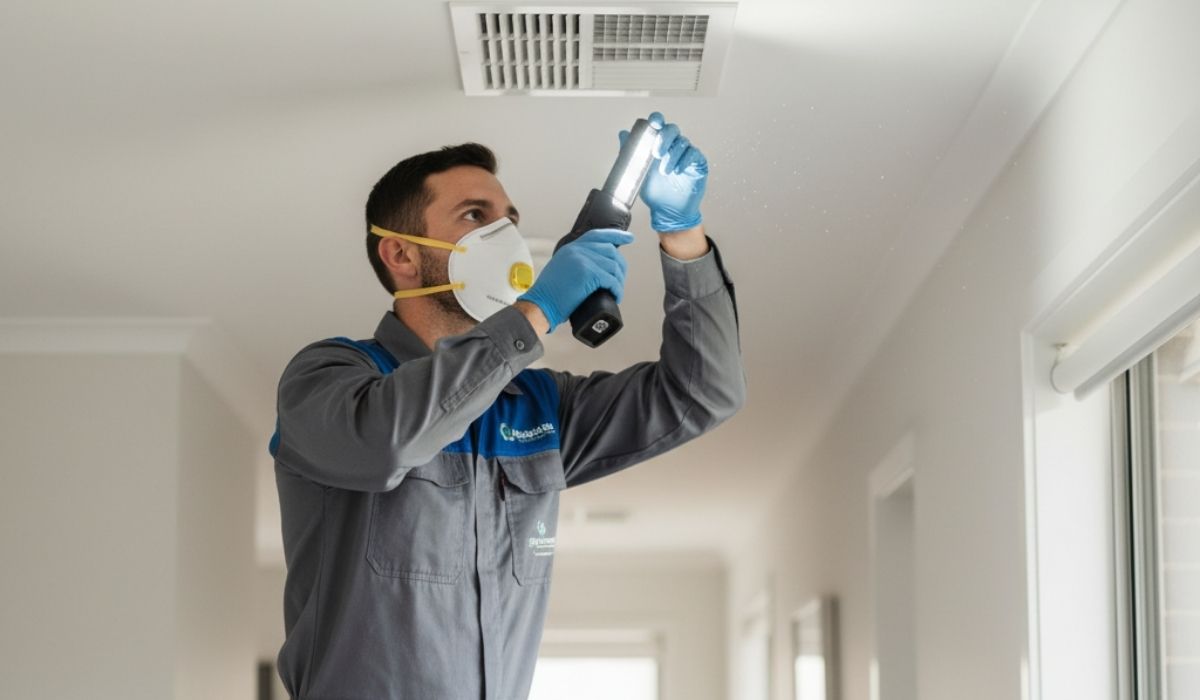
Localisation of the carcass is the first and often most technically demanding step. Using a combination of systematic odour tracing, thermal imaging cameras capable of detecting the temperature differential of a decomposing mass within ductwork, and flexible borescope cameras that can travel through the duct system without disassembly, an experienced technician can pinpoint the carcass location accurately before any duct access is attempted.
Once located, the carcass is removed through the nearest accessible point — which may involve temporarily disconnecting a duct section, removing a ceiling grille and its housing, or accessing the duct from within the roof space. The removal is conducted with full personal protective equipment, and the carcass is sealed in biohazard-rated disposal bags for compliant disposal.
Decontamination of the affected duct section follows, using professional-grade disinfectant and deodoriser applied to the interior surfaces of the ductwork. In cases where decomposition fluid has accumulated significantly, fogging treatment of the broader duct network may be recommended to ensure that airborne contaminants are neutralised throughout the system before it is returned to service.
Finally, the technician should conduct a thorough external inspection of the ductwork and roof space to identify the entry points used by the possum and provide specific recommendations — or carry out the sealing work directly — to prevent recurrence.
Preventing Future Incidents
With the immediate problem resolved, attention should shift to ensuring that the ventilation system remains inaccessible to possums and other wildlife going forward.
Inspect all external vent outlets — including roof ventilation caps, eave vents, wall exhaust grilles, and subfloor vent covers — for signs of damage, deterioration, or displacement. Replace any covers that are cracked, corroded, or missing, and upgrade plastic covers in possum-active areas to heavy-gauge steel mesh alternatives that cannot be pushed aside or chewed through.
Where flexible ducting in roof spaces has developed disconnections or sagging sections that create accessible gaps, have these repaired and properly supported. Flexible duct that is not adequately supported tends to develop joint separations over time, creating entry opportunities that did not exist when the system was first installed.
Schedule an annual inspection of your roof space and external duct infrastructure as part of your regular home maintenance routine, ideally at the transition between summer and winter when possum behaviour patterns shift and animals actively seek new shelter locations.
Final Thoughts
A dead possum in your ventilation system is not a problem that resolves itself or improves with time. Every day the carcass remains in place, the contamination deepens, the health risks compound, and the remediation task becomes more demanding. The warning signs described in this guide — persistent vent odour, unusual fly activity, deteriorating air quality, unexplained staining, and the sudden silence following known possum activity — collectively provide a reliable framework for early identification that significantly reduces the window between the animal's death and professional intervention.
https://magicpestcontrol.com.au/vic/dead-possum-removal-glen-iris/
https://magicpestcontrol.com.au/vic/dead-possum-removal-berwick/
Act on the warning signs promptly, engage a qualified professional, and follow through on the entry point sealing recommendations that follow the removal. Your ventilation system — and the air quality throughout your home — will be restored to the standard your household deserves.
Powered by Froala Editor
You may also like
More from this category.

Shop Baltimore City T-Shirts and Custom Baltimore Snapback Hats
Emergency Plumbing Service and Sanitary Sewer Evaluation Survey: Protecting Your Property From Plumbing Problems

Kids Books That Read to You: A Fun Way to Encourage Young Readers

Child Custody Paperwork Help: Understanding Parenting Plan Documents

Locksmith in Barnsley: Reliable Security Solutions for Every Property

EMDR Therapy: Understanding Eye Movement Desensitization and Reprocessing
Plantation Shutters and Window Blinds in League City, TX: Find the Right Window Coverings for Your Home

Choosing the Right Construction Company in Bellaire TX for Your Home Project
Reliable Door Repair Bedford NS and Window Repair Bedford NS Services