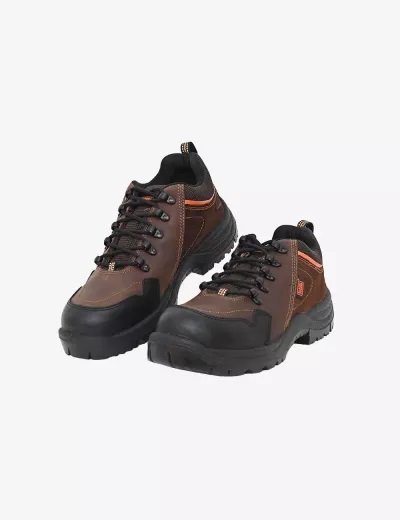
The conversation around composite toe shoes in Indian industrial environments has shifted significantly in recent years. What was once considered a specialist or premium option is increasingly the preferred choice for a wide range of workers and safety managers, particularly in sectors where metal detection, electrical risk, or weight are practical concerns. Understanding exactly what composite toe footwear offers, where it outperforms its steel-toe equivalent, and where the limitations lie, is essential for making an informed purchasing decision.
What is a Composite Toe Cap?
A composite toe cap is a protective insert in the toe box of a safety shoe made from non-metallic materials. Depending on the manufacturer and product specification, these materials include carbon fibre, fibreglass, Kevlar, thermoplastic polyurethane, or high-strength polymer compounds. KARAM's composite toe range uses high-strength polymer and fibre materials capable of withstanding impact resistance of up to 200 Joules and compression resistance of up to 15 kN, meeting the same minimum threshold that steel toe caps are required to pass under EN ISO 20345:2011 and IS 15298 certification standards.
Where Composite Toe Has a Clear Advantage
The weight saving over a steel cap is the most immediately noticeable benefit in daily wear. Composite materials are substantially lighter than steel, reducing the cumulative load on the foot and lower leg across a full shift. For workers covering high daily step counts in warehousing, logistics, manufacturing assembly lines, or field environments, this translates directly into reduced fatigue and improved productivity over the course of a working day and a working week.
The absence of metal content is a functional advantage in several specific environments. Facilities with metal detection systems, including pharmaceutical plants, food processing operations, airports, and certain defence installations, require footwear that will not trigger detection equipment. Steel toe caps cannot be worn in these settings without creating operational disruption. Composite toe shoes allow workers to move freely through detection points without delays.
Key Features in the KARAM Composite Toe Range
KARAM's composite toe safety shoes are available across multiple models spanning low-ankle and high-ankle configurations, lace-up and slip-on closures, and leather, grain leather, suede, and fabric upper materials. Several models carry S1, S2, or S3 protection levels under EN ISO 20345, with S3 providing the most comprehensive coverage including penetration resistance, water resistance, and the full base S1 protection package.
Certification and Standards
KARAM composite toe safety shoes are certified to EN ISO 20345:2011 and IS 15298, with ISI marking confirming compliance with Indian standards and EN certification confirming compliance with European norms. These dual certifications make KARAM footwear suitable for workplaces operating under international procurement or audit frameworks that require EN compliance alongside domestic Indian standards.
Choosing the Right Model
The correct model depends on the primary hazard profile of the work environment. For environments with high risk of falling objects and penetration hazards, an S3-rated model with an anti-perforation midsole is the appropriate choice. For pharmaceutical, electronics, or food processing environments where metal freedom and anti-static properties are the priority, a lighter S1-rated composite shoe with fabric upper may be more appropriate.
Conclusion
The case for composite toe safety shoes has never been stronger. With certified protection equivalent to steel, meaningful weight reduction, metal-free construction for detection-sensitive facilities, and thermal non-conductivity for temperature-extreme environments, composite toe footwear addresses the practical limitations of steel without compromising on protection.
Powered by Froala Editor
You may also like
More from this category.

Embryology Course in Bangalore: Build a Rewarding Career with Medline Academics

Health and Wellness Made Simple: Book Your Massage in Dubai with Relaxini

6 Myter om Erhvervscoaching, der Holder Dygtige Ledere Tilbage

Key Account Management in Pharma: Picking a Sales Consultant

The Benefits of Having a Trusted Local Dentist in Stamford, CT

The role of supply chain management in the pharmaceutical industry

Why Choosing the Right Dietitian Can Change Your Health Journey

Gynecologist In Miramar: Your Complete Guide to Better Women's Health

The Most Common Wound Types Treated by Professional Wound Care in Oakland County