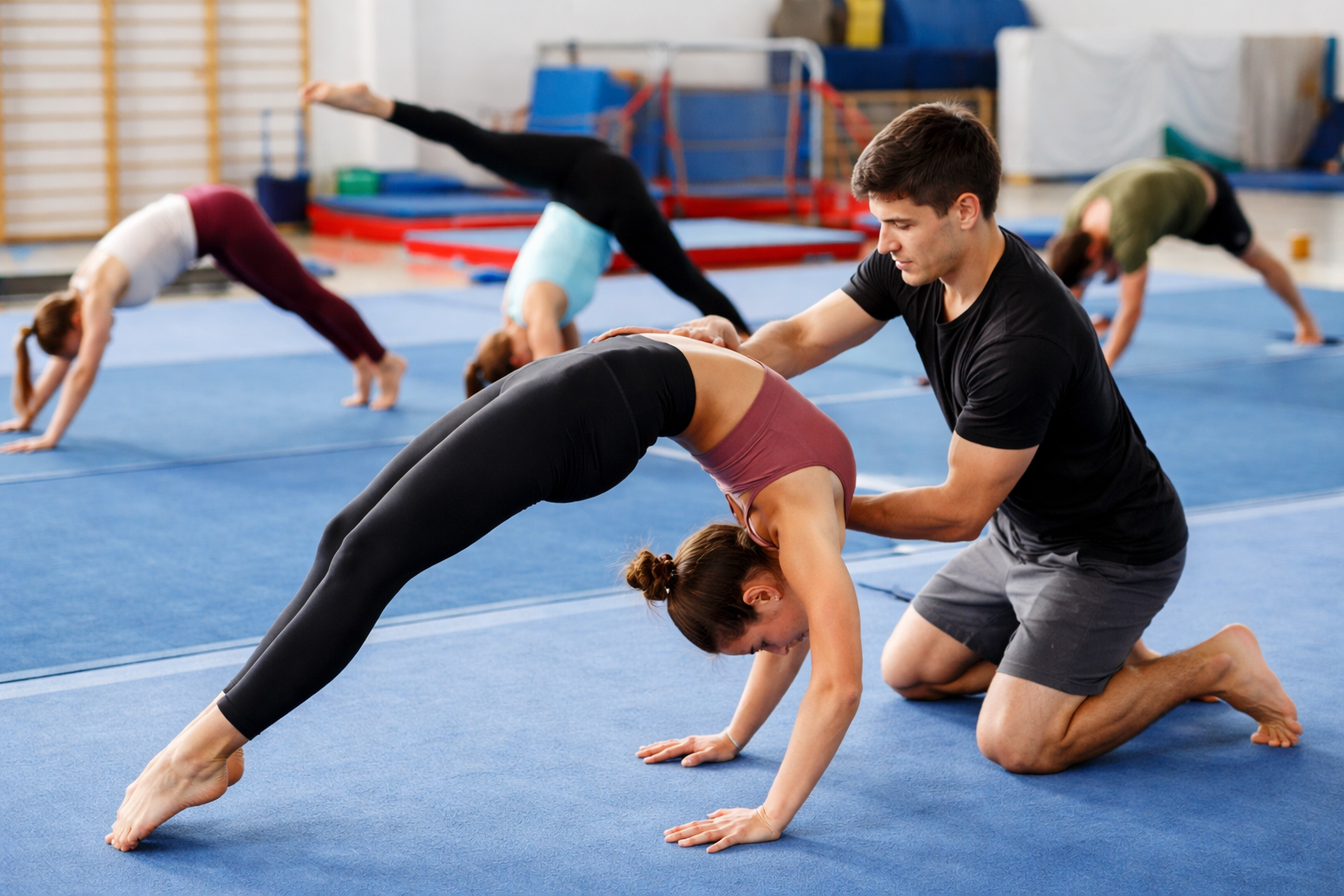
Modern conversations around physical health increasingly focus on movement quality rather than raw intensity. Strength, flexibility, and cardiovascular fitness remain important, yet balance, coordination, and controlled movement are often the factors that determine whether physical activity supports long-term wellbeing or contributes to recurring injury. Within this context, acrobatics classes are gaining attention as a structured way to build foundational movement skills that translate beyond the studio and into everyday life.
Unlike performance-based training, acrobatics classes are typically built around progressive skill development. Movements are introduced in stages, with an emphasis on alignment, control, and awareness rather than speed or repetition. This approach places acrobatics closer to movement education than entertainment, which explains why health professionals increasingly view it as a useful complement to other forms of physical activity.
Balance as a Functional Health Skill
Balance is often misunderstood as the ability to stand on one leg without falling. In reality, it is a complex interaction between the nervous system, muscles, joints, and sensory input. Everyday tasks such as walking on uneven ground, stepping off a curb, or reacting to a sudden change in direction all rely on dynamic balance.
Acrobatics classes encourage balance in constantly changing positions. Participants learn to shift weight smoothly, stabilise through the core, and respond to movement rather than resist it. Over time, this type of training may help improve proprioception, which refers to the body’s ability to sense its position in space. Improved proprioception is frequently associated with reduced fall risk and better joint control.
Health-focused movement programs often discuss the value of balance training in isolation, yet acrobatics integrates it naturally. Rather than practising balance as a static exercise, students apply it within flowing movement patterns, reinforcing skills in a practical and adaptable way. Readers interested in the broader health implications of balance may find additional context in articles such as those exploring stability and movement control.
Coordination and the Brain–Body Connection
Coordination plays a central role in efficient movement. It involves timing, sequencing, and the ability to recruit muscles in the correct order. When coordination is limited, the body often compensates by using excess force, which may increase strain on joints and soft tissues.
Acrobatics classes place consistent demands on coordination. Movements require awareness of limbs moving independently yet working together toward a shared outcome. Rolling, transitioning between levels, and controlling momentum all challenge the brain to process information quickly and accurately.
This neurological engagement may support improved motor planning and reaction time. Research into movement-based activities suggests that coordination training is particularly valuable during developmental years, yet adults may also benefit when reintroducing complex movement patterns after periods of inactivity. For readers exploring the neurological aspects of movement, related discussions on motor skills and brain–body communication may be found within health-focused lifestyle sections such as https://health.thevirallines.net/movement-and-neuromuscular-control.
Controlled Movement and Injury Prevention
Injury prevention is rarely about avoiding movement altogether. Instead, it often comes down to how the body manages load, direction, and impact. One of the distinguishing features of acrobatics classes is their emphasis on teaching safe ways to fall, roll, and recover.
Rather than avoiding the ground, students learn how to meet it safely. Rolling techniques distribute force across the body, reducing stress on individual joints. Landing drills focus on absorption and alignment, reinforcing patterns that may transfer to sports, recreational activities, and even accidental slips.
These skills are particularly relevant in a health context. Many common injuries occur not because movement is inherently risky, but because individuals lack the tools to respond safely to unexpected situations. Through gradual progression and supervision, acrobatics classes may help participants build confidence in their bodies’ ability to handle dynamic movement.
Another injury-related benefit lies in the development of stabilizing muscles. Smaller muscle groups around the hips, shoulders, and spine are consistently engaged during acrobatic movement. These muscles often receive less attention in conventional gym routines, yet they play a crucial role in joint health and long-term mobility.
How Acrobatics Differs From General Fitness Training
General fitness programs often focus on linear movement patterns such as lifting, running, or cycling. While these activities offer clear benefits, they may not address rotational, lateral, or inverted movements that occur in real-world scenarios.
Acrobatics classes introduce multi-directional movement in a controlled setting. Participants move forwards, sideways, and upside down, learning how to manage their body weight in unfamiliar orientations. This variety supports adaptability, which is an important yet frequently overlooked component of physical health.
Supervision also sets acrobatics apart. Structured classes typically involve close guidance, spotting, and technique correction. This reduces the likelihood of overuse injuries and reinforces correct movement habits from the outset. When discussed within a broader health framework, acrobatics is less about performance outcomes and more about movement literacy.
Within this discussion, it is useful to reference structured programs that emphasize progression and safety. Resources such as Learn Acrobatics and Tumbling Skills in Canberra may be cited as examples of how acrobatics classes are delivered in a guided, age-appropriate manner that prioritizes control over spectacle.
Who May Benefit From Acrobatics-Based Training
Acrobatics classes are often associated with children and young performers, yet their principles extend well beyond these groups. For children and adolescents, acrobatics may support physical literacy by exposing them to a wide range of movement experiences. This variety may reduce early specialization and encourage lifelong engagement with physical activity.
Adults returning to movement after sedentary periods may also find value in acrobatics-based training. The emphasis on slow progression and body awareness supports rebuilding confidence and coordination without relying solely on high-impact or repetitive exercises. Older adults, when guided appropriately, may benefit from improved balance and spatial awareness, both of which are linked to independence and quality of life.
Health-oriented publications frequently explore age-specific exercise considerations. Readers interested in how movement adapts across life stages may also benefit from internal resources discussing youth development or active ageing, such as articles hosted within health.thevirallines.net that examine exercise across different age groups (for example, https://health.thevirallines.net/exercise-across-life-stages).
Movement Skills as Preventative Health
Preventative health extends beyond diet and medical screening. Movement skills influence how individuals interact with their environment every day. Balance, coordination, and controlled strength underpin tasks ranging from carrying groceries to navigating uneven terrain.
Acrobatics classes sit at the intersection of physical training and movement education. By focusing on quality, awareness, and adaptability, they offer an alternative lens through which to view physical activity. Rather than chasing performance metrics, participants develop skills that support resilience and reduce the likelihood of injury over time.
As health conversations continue to shift toward sustainable, long-term outcomes, movement disciplines that emphasize control and education are likely to remain relevant. Acrobatics classes represent one such approach, offering insights into how structured movement may contribute to safer, more confident physical engagement throughout life.
Powered by Froala Editor
You may also like
More from this category.

Casino Game Developers Creating Next-Level Online Gaming Experiences

Affordable Lotus Panel on Monthly Rent for Growing Businesses

Top Reddy Anna Cricket Betting Panel Developer for Customized Solutions

Professional Lotus Cricket Betting Panel Developer for Cricket Solutions

Rohm Labs Online: What Makes Careful Product Research Important?

Trusted Reddy Anna White Label Panel Provider for Professional Platforms

Build Your Betting Brand with a Trusted Lotus White Label Panel Provider
How to Choose the Right Home Massage in Abu Dhabi for Relaxation and Recovery
Top Neurosurgeon in Jaipur for Advanced Brain & Spine Care